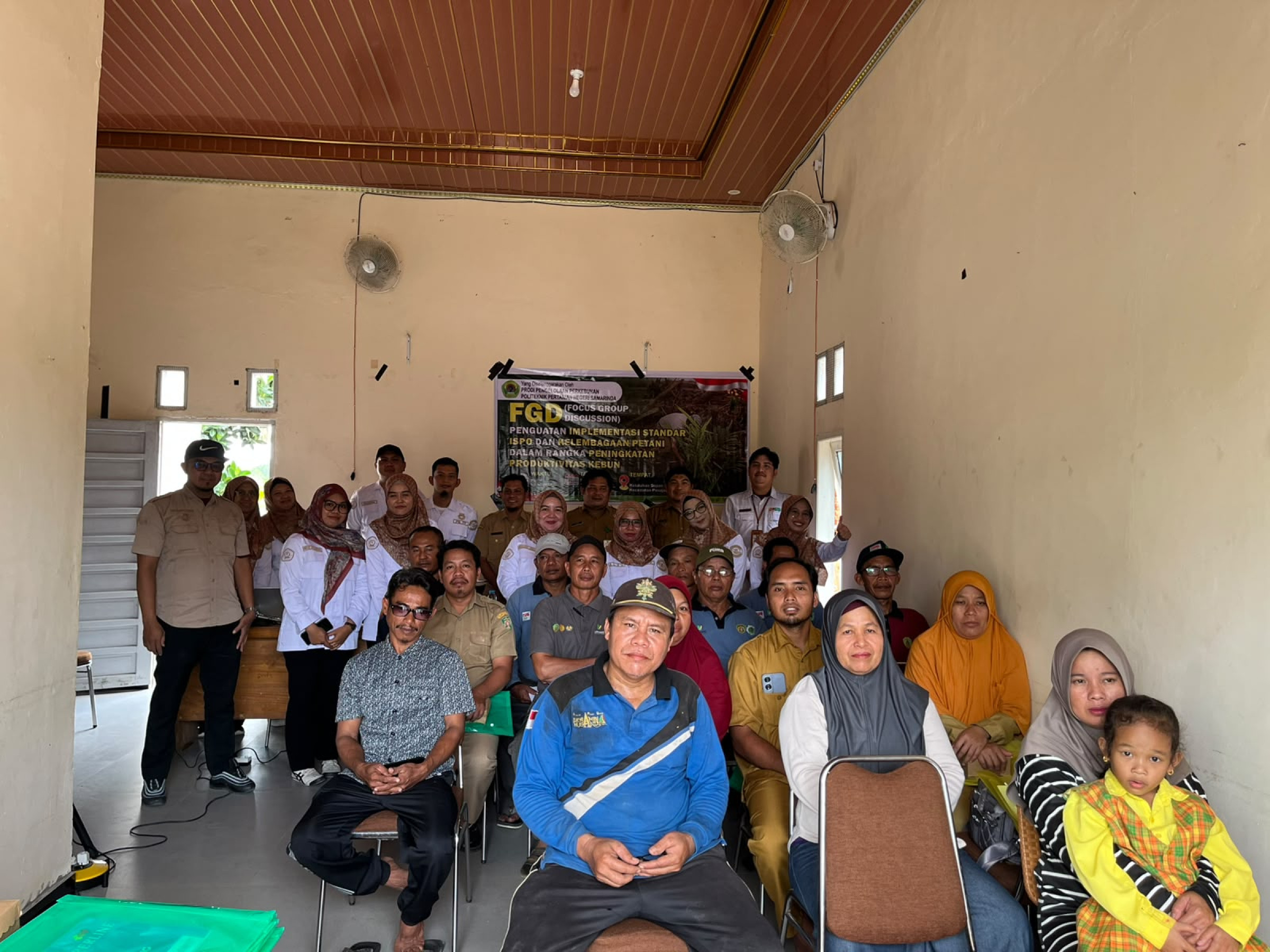
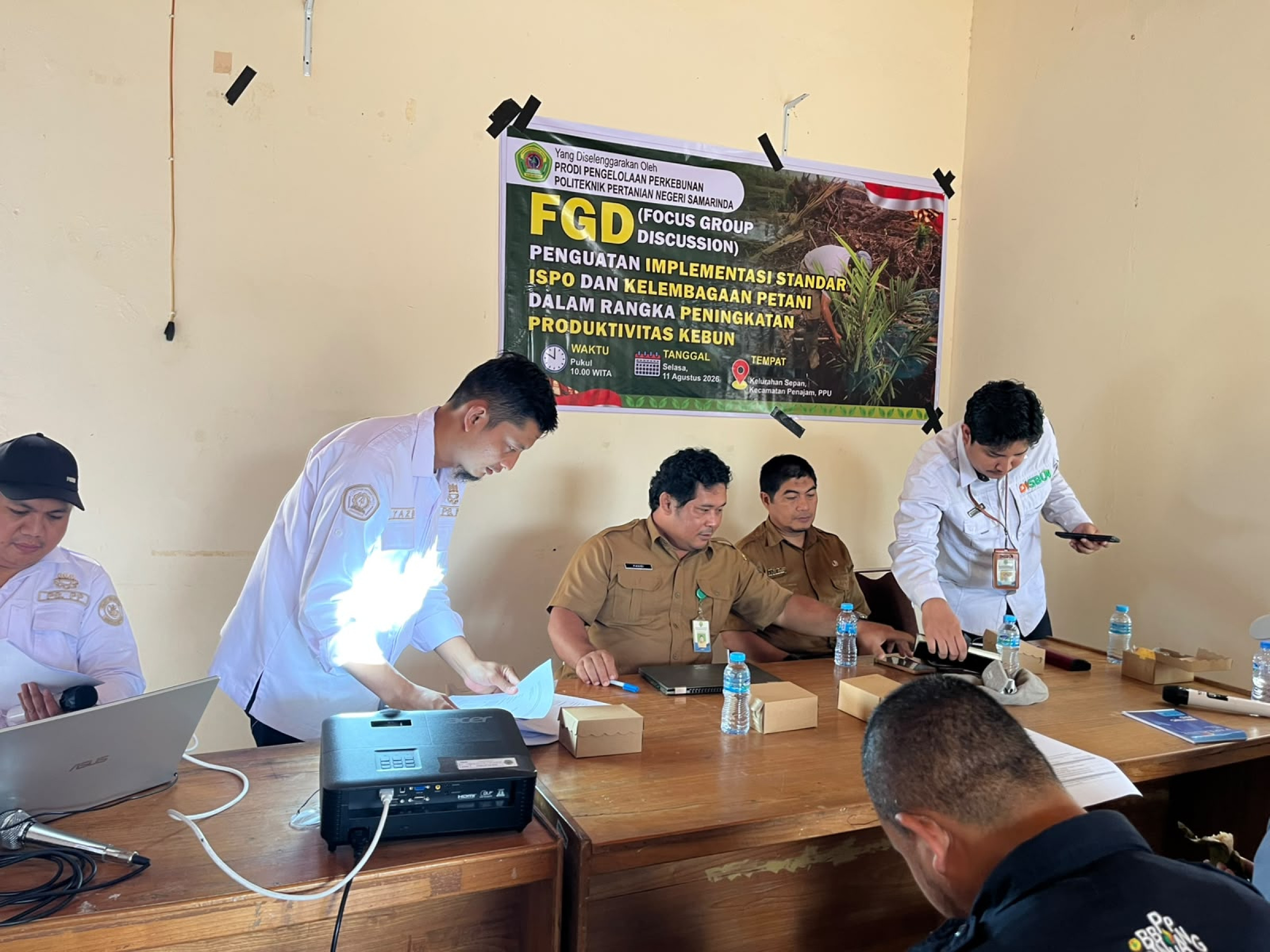
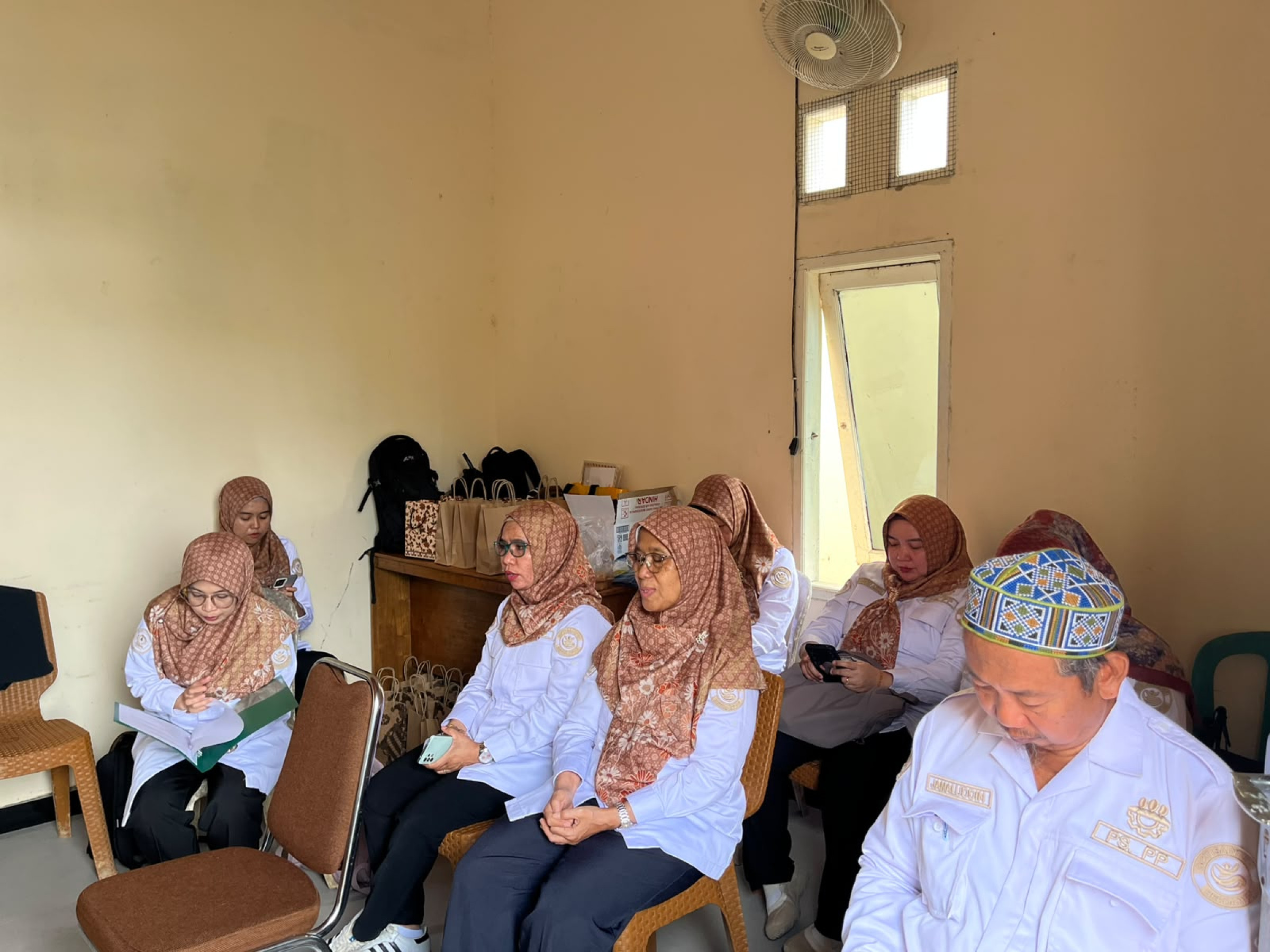
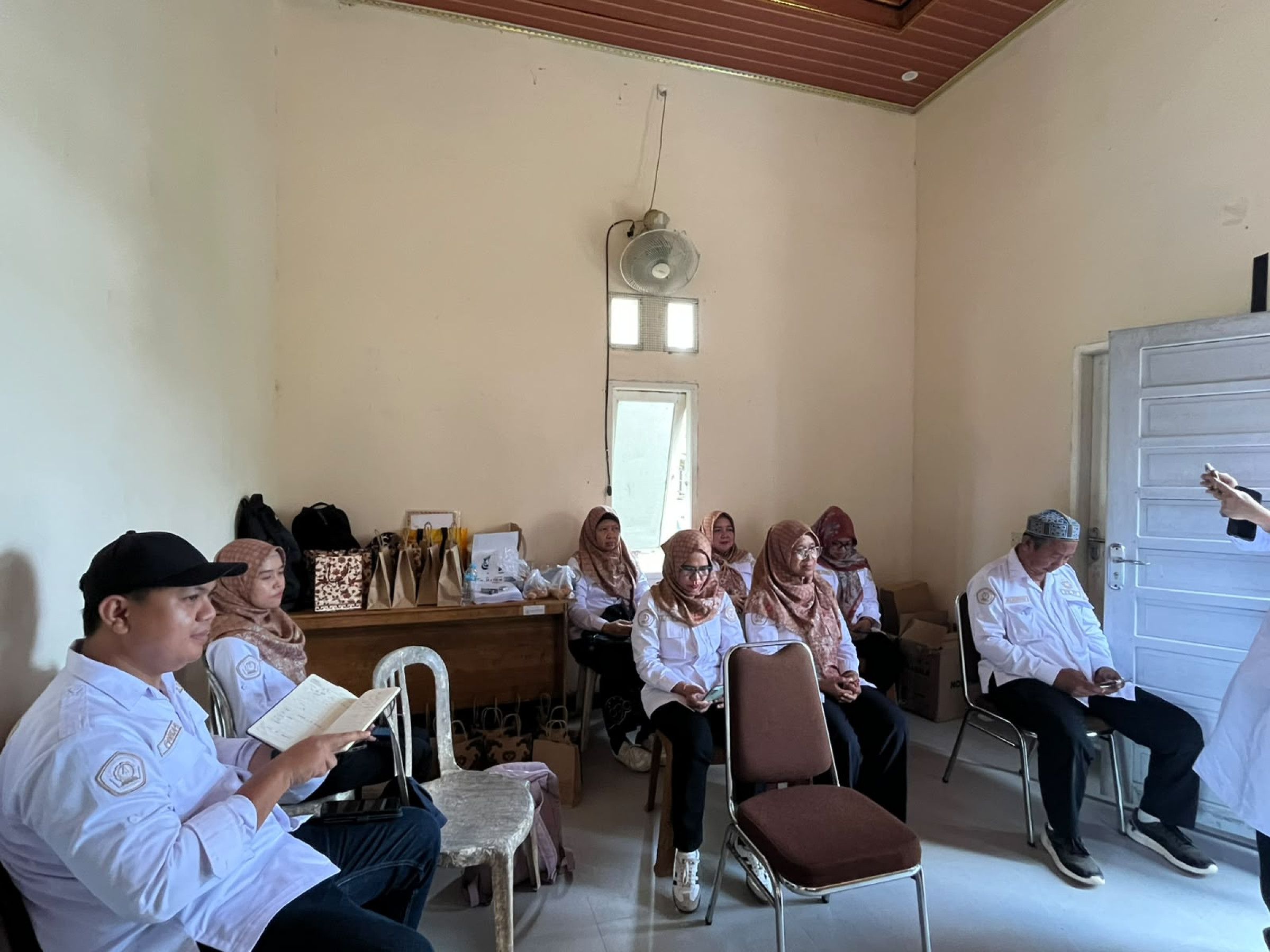
Penajam Paser Utara, August 11, 2026 — The Samarinda State Agricultural Polytechnic, through its Plantation Management Study Program, reinforced its contribution as an impactful vocational higher education institution by hosting a Focus Group Discussion (FGD) titled "Strengthening ISPO Standard Implementation and Farmer Institutions to Boost Plantation Productivity." The event took place in Sepan Urban Village, Penajam District, North Penajam Paser Regency, East Kalimantan, on Tuesday (August 11, 2026).
This activity is part of an effort to strengthen synergy among higher education institutions, local government, and the plantation community. The goal is to drive the adoption of Indonesian Sustainable Palm Oil (ISPO) standards and enhance the institutional capacity of farmers, thereby laying the foundation for increased productivity and plantation sustainability.
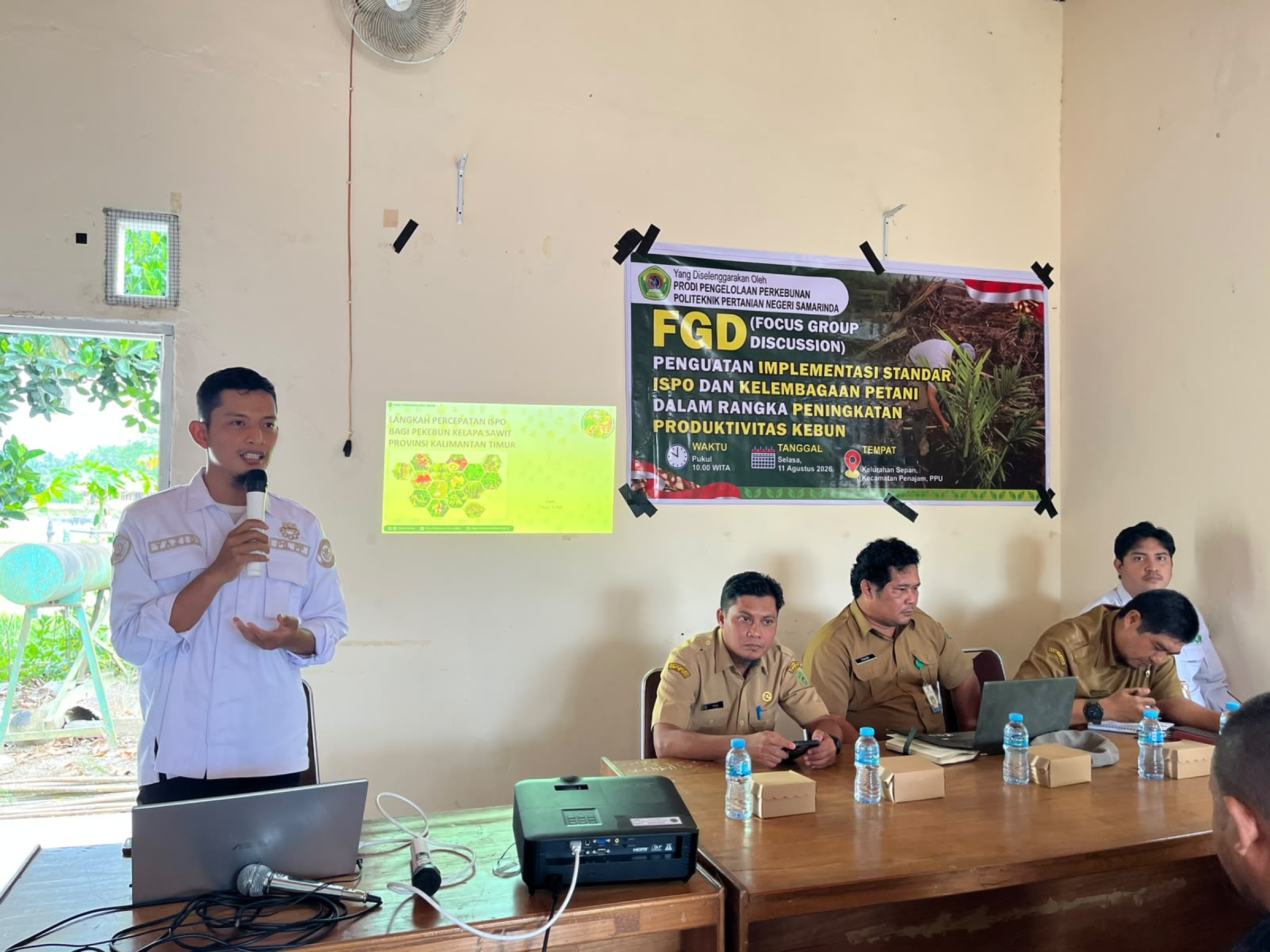
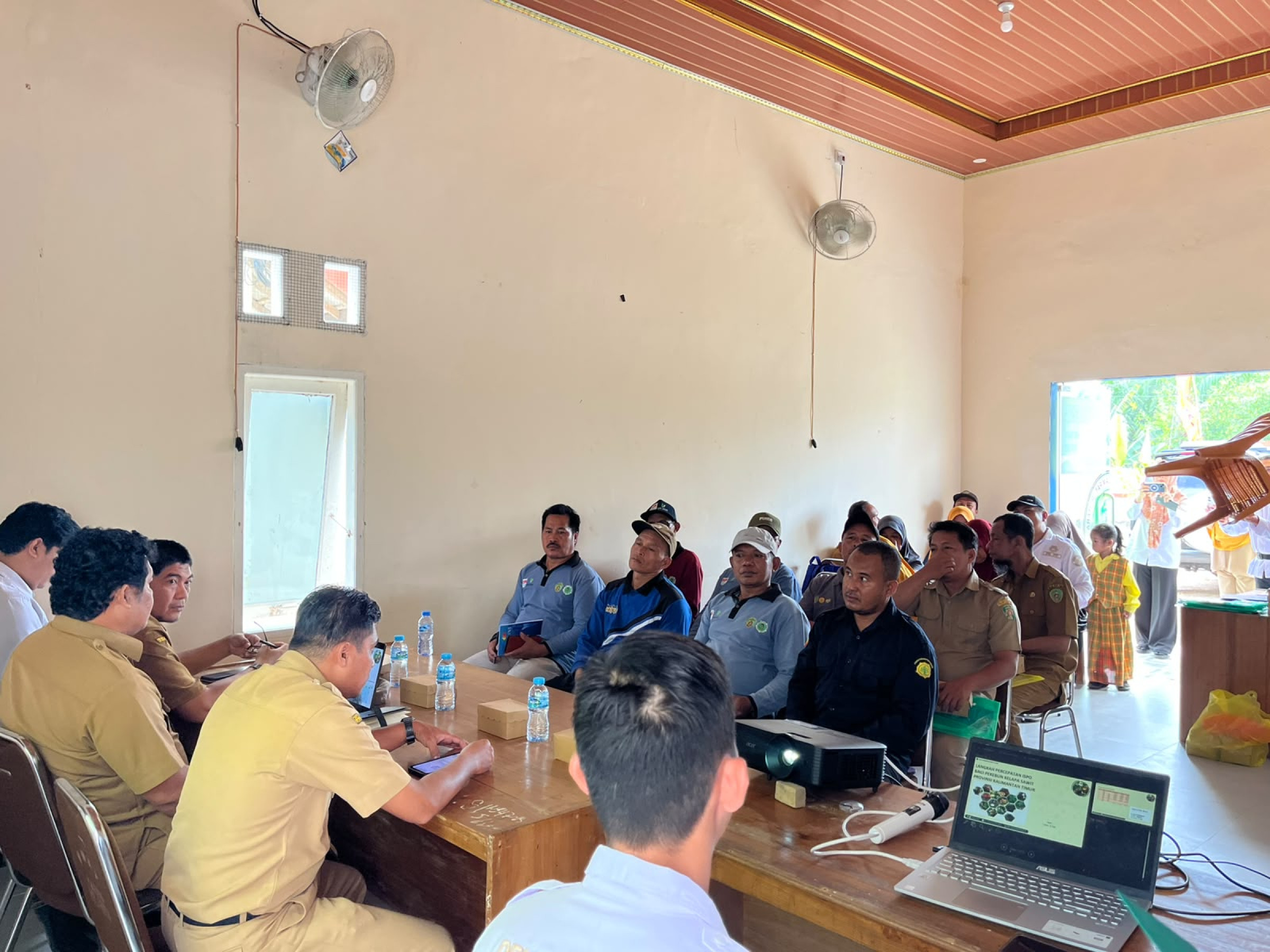
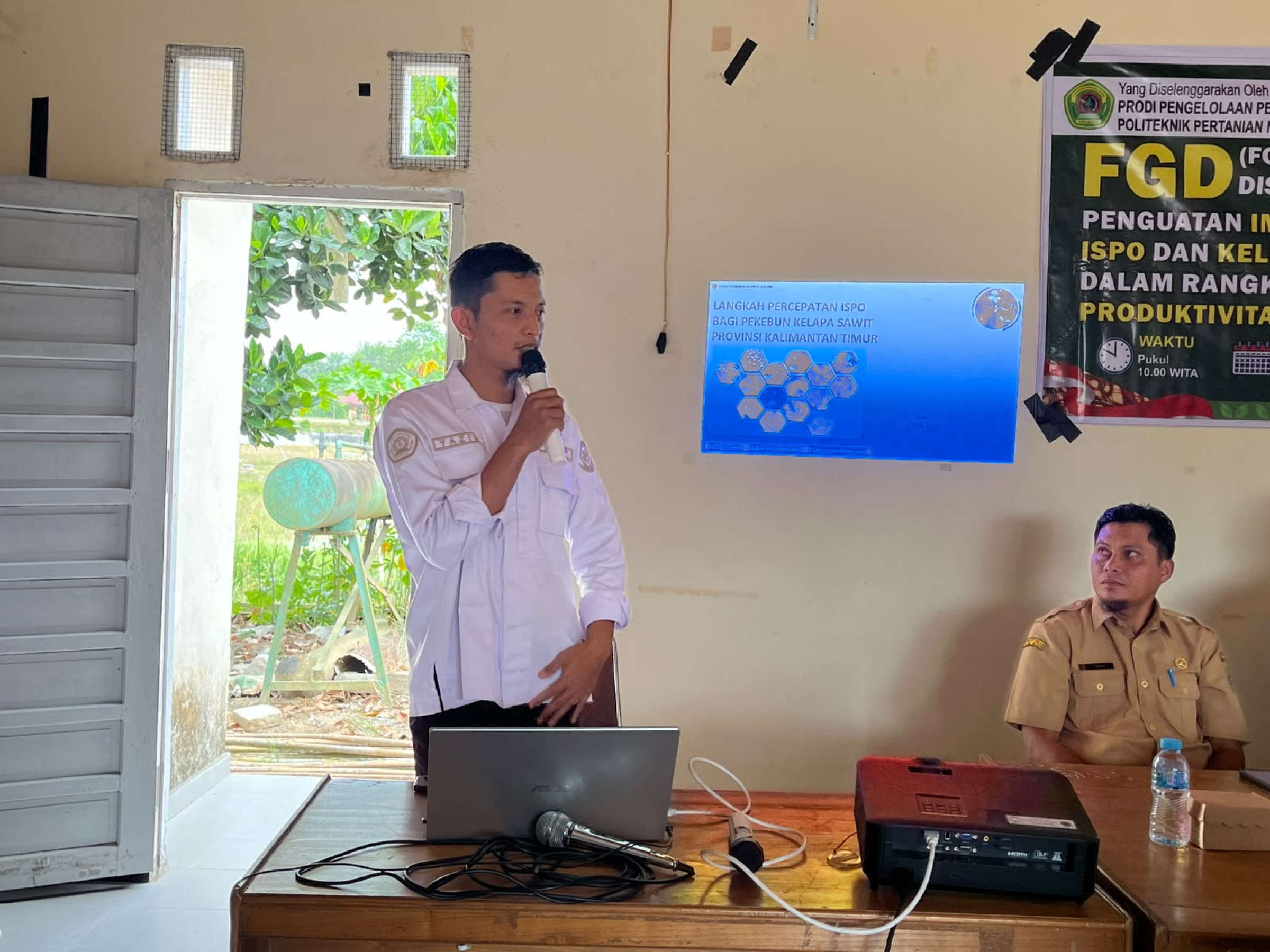
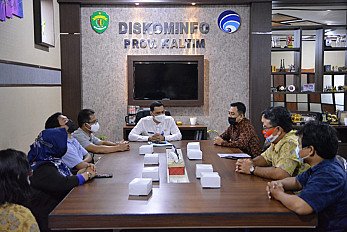
The FGD was led by Muhammad Yazid Bustomi, S.P., M.Sc., and featured Fauzi, S.Hut., from the East Kalimantan Provincial Plantation Office as a speaker. The presentation addressed measures to accelerate ISPO adoption for oil palm smallholders in East Kalimantan and deepened understanding regarding the importance of implementing sustainability standards in plantation management.
Strengthening ISPO implementation at the smallholder level requires institutional structures capable of supporting a focused business management process. In this context, farmer institutions serve as a strategic element for enhancing capacity, coordination, and access to information, as well as improving smallholders' ability to adopt plantation practices aligned with sustainability principles.
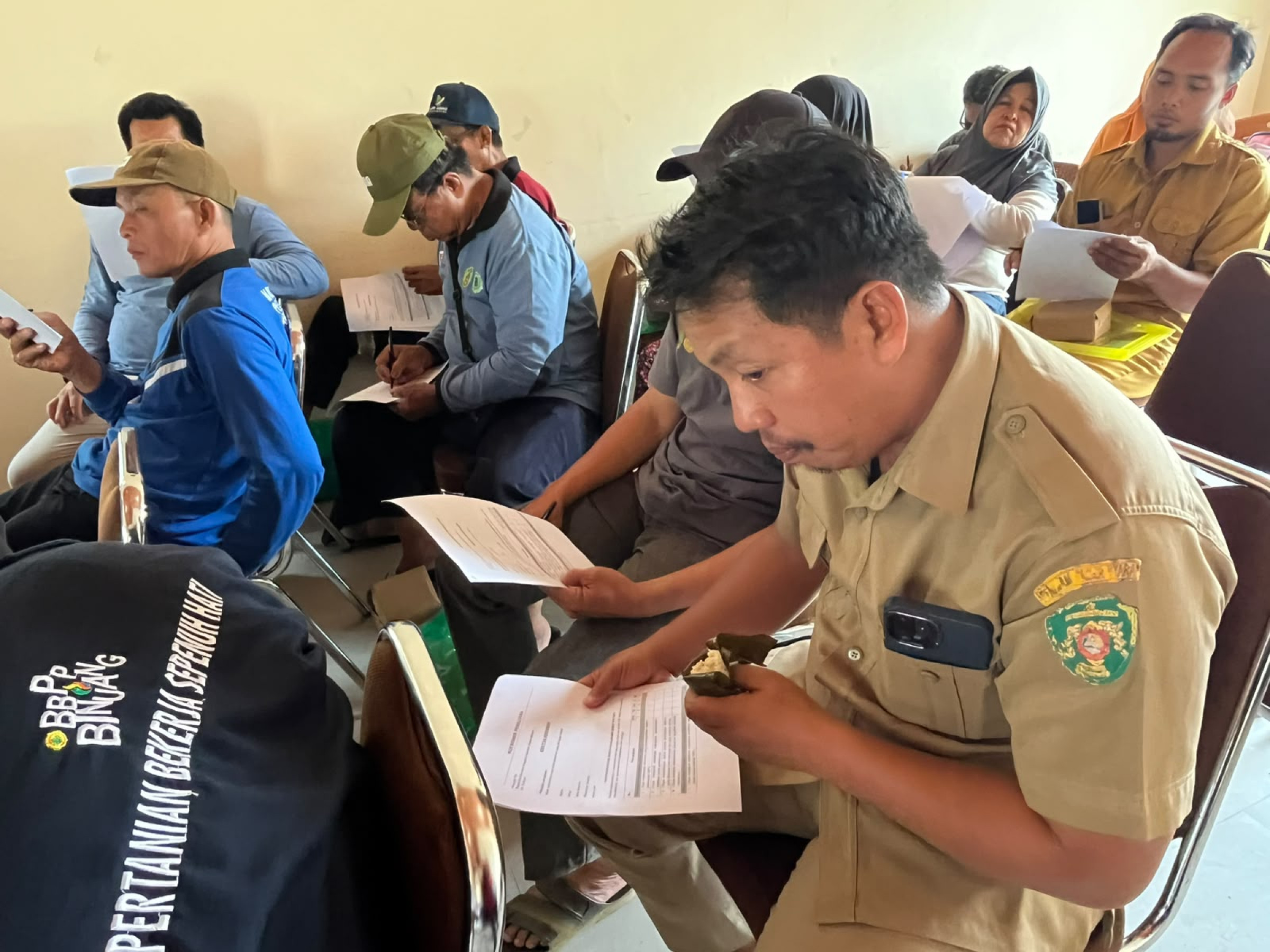
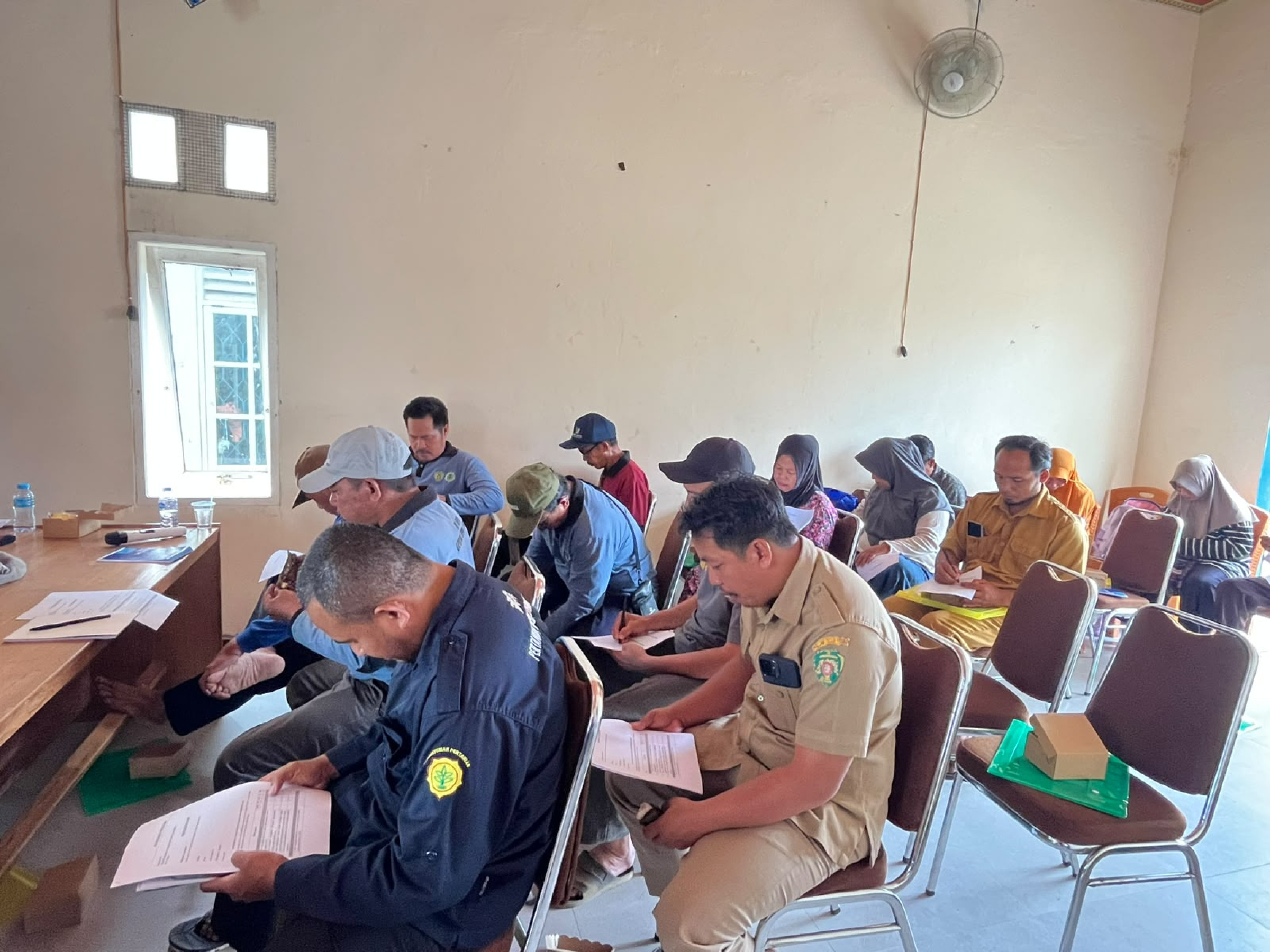
To ensure that strengthening efforts are grounded in actual field conditions, the project team distributed questionnaires to the *Gapoktan* (Association of Farmer Groups) in Sepan Urban Village. This data collection aimed to map institutional conditions, farmers' understanding, and the specific needs and challenges faced regarding ISPO implementation and the improvement of plantation productivity.
Field data serves as a crucial tool for designing more targeted assistance approaches. Through this mapping process, the university can identify community capacity-building needs while developing recommendations and programs that are better suited to the characteristics of the smallholders and local plantation conditions.
This activity exemplifies the university's role in delivering direct benefits to the community by strengthening knowledge and capacity based on actual needs. Politani Samarinda not only prepares a skilled vocational workforce but also bridges academic competence with real-world challenges faced by the community, particularly in the agriculture and plantation sectors.
Synergy with the East Kalimantan Provincial Plantation Office and the *Gapoktan* represents a vital step toward building a more robust plantation ecosystem. This collaboration facilitates knowledge exchange, the provision of field data, and the development of solutions that support both increased productivity and adherence to sustainability principles.
Through this initiative, Politani Samarinda fosters a transformation in the plantation sector that focuses not only on increasing yields but also on institutional strengthening, the adoption of sustainability standards, and enhancing smallholder competitiveness. These efforts align with the spirit of "Impactful Higher Education, Science, and Technology" (*Diktisaintek Berdampak*), aiming to provide measurable and relevant contributions to the community and the development of strategic regional sectors.
Moving forward, the results of the Focus Group Discussions (FGD) and the data gathered from the *Gapoktan* are expected to serve as a foundation for enhancing assistance and developing programs that are more closely aligned with the smallholders' needs. Through continued collaboration among higher education institutions, the government, and the community, the implementation of ISPO is expected to strengthen and contribute to the realization of productive, sustainable, and competitive oil palm plantations.
This activity is part of an effort to strengthen synergy among higher education institutions, local government, and the plantation community. The goal is to drive the adoption of Indonesian Sustainable Palm Oil (ISPO) standards and enhance the institutional capacity of farmers, thereby laying the foundation for increased productivity and plantation sustainability.
The FGD was led by Muhammad Yazid Bustomi, S.P., M.Sc., and featured Fauzi, S.Hut., from the East Kalimantan Provincial Plantation Office as a speaker. The presentation addressed measures to accelerate ISPO adoption for oil palm smallholders in East Kalimantan and deepened understanding regarding the importance of implementing sustainability standards in plantation management.
Strengthening ISPO implementation at the smallholder level requires institutional structures capable of supporting a focused business management process. In this context, farmer institutions serve as a strategic element for enhancing capacity, coordination, and access to information, as well as improving smallholders' ability to adopt plantation practices aligned with sustainability principles.
To ensure that strengthening efforts are grounded in actual field conditions, the project team distributed questionnaires to the *Gapoktan* (Association of Farmer Groups) in Sepan Urban Village. This data collection aimed to map institutional conditions, farmers' understanding, and the specific needs and challenges faced regarding ISPO implementation and the improvement of plantation productivity.
Field data serves as a crucial tool for designing more targeted assistance approaches. Through this mapping process, the university can identify community capacity-building needs while developing recommendations and programs that are better suited to the characteristics of the smallholders and local plantation conditions.
This activity exemplifies the university's role in delivering direct benefits to the community by strengthening knowledge and capacity based on actual needs. Politani Samarinda not only prepares a skilled vocational workforce but also bridges academic competence with real-world challenges faced by the community, particularly in the agriculture and plantation sectors.
Synergy with the East Kalimantan Provincial Plantation Office and the *Gapoktan* represents a vital step toward building a more robust plantation ecosystem. This collaboration facilitates knowledge exchange, the provision of field data, and the development of solutions that support both increased productivity and adherence to sustainability principles.
Through this initiative, Politani Samarinda fosters a transformation in the plantation sector that focuses not only on increasing yields but also on institutional strengthening, the adoption of sustainability standards, and enhancing smallholder competitiveness. These efforts align with the spirit of "Impactful Higher Education, Science, and Technology" (*Diktisaintek Berdampak*), aiming to provide measurable and relevant contributions to the community and the development of strategic regional sectors.
Moving forward, the results of the Focus Group Discussions (FGD) and the data gathered from the *Gapoktan* are expected to serve as a foundation for enhancing assistance and developing programs that are more closely aligned with the smallholders' needs. Through continued collaboration among higher education institutions, the government, and the community, the implementation of ISPO is expected to strengthen and contribute to the realization of productive, sustainable, and competitive oil palm plantations.
-thumb.jpg)