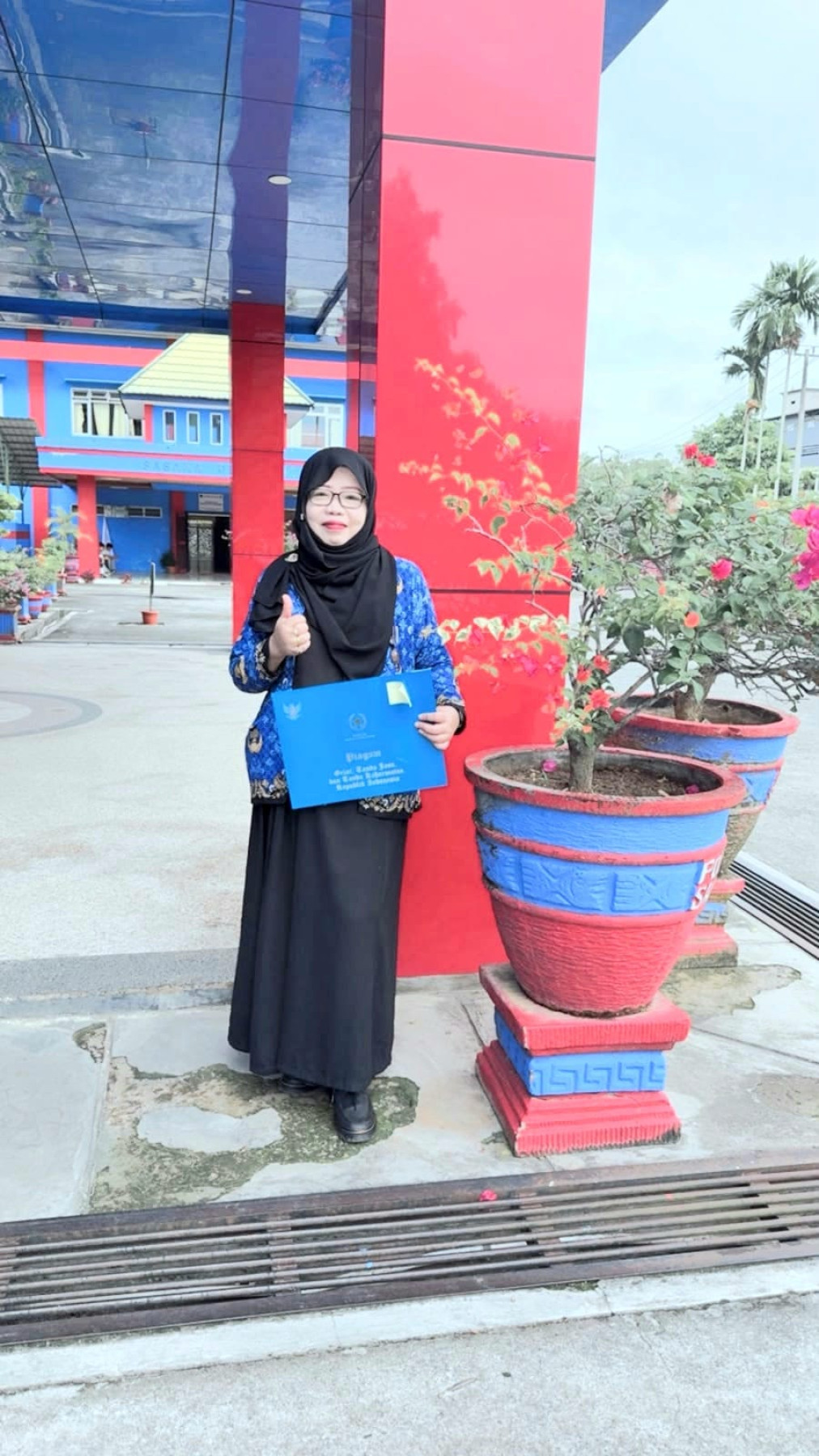
SAMARINDA (01/09/2026) — Samarinda State Agricultural Polytechnic (Politani Samarinda) continues to strengthen its contribution in developing vocational education, applied research and agricultural innovation to support food security. This commitment was realized through the participation of Haryatie Sarie, S.P., M.P., an academic and researcher at Politani Samarinda, in international training organized by the World Food Program (WFP).
Haryatie Sarie was selected to take part in the "Empowering Smallholders for Food Security and Resilience: Online Training on Post-harvest Loss Management Technologies for Smallholders" program organized by the WFP Center of Excellence for Rural Transformation (WFP China COE) in collaboration with China Agricultural University (CAU). Training will be held online throughout September 2026.
This participation is a strategic opportunity for Politani Samarinda to expand its international network while increasing the capacity of lecturers in the field of post-harvest technology. It is hoped that the knowledge gained can be further developed through learning, applied research and community service.
Answering the Challenge of Postharvest Losses
Strengthening post-harvest technology is an important part of efforts to build a resilient and sustainable food system. Apart from increasing production, efforts to maintain the quality of agricultural products after harvest are needed to reduce food loss, maintain quality, and increase the economic value received by farmers.
This issue is increasingly important for small farmers who still face various limitations in access to technology and storage facilities. Therefore, increasing human resource capacity and mastery of post-harvest technology is one of the strategic steps in supporting food security.
Through this WFP program, Haryatie Sarie has the opportunity to deepen his knowledge of post-harvest loss management technology as well as learn relevant international practices and experiences to be developed in the Indonesian agricultural context.
Four Pillars of Superior Material
Training guided by Prof. Liu Yanhong from China Agricultural University (CAU) covers four main materials which will be held in September 2026, namely:
Haryatie Sarie was selected to take part in the "Empowering Smallholders for Food Security and Resilience: Online Training on Post-harvest Loss Management Technologies for Smallholders" program organized by the WFP Center of Excellence for Rural Transformation (WFP China COE) in collaboration with China Agricultural University (CAU). Training will be held online throughout September 2026.
This participation is a strategic opportunity for Politani Samarinda to expand its international network while increasing the capacity of lecturers in the field of post-harvest technology. It is hoped that the knowledge gained can be further developed through learning, applied research and community service.
Answering the Challenge of Postharvest Losses
Strengthening post-harvest technology is an important part of efforts to build a resilient and sustainable food system. Apart from increasing production, efforts to maintain the quality of agricultural products after harvest are needed to reduce food loss, maintain quality, and increase the economic value received by farmers.
This issue is increasingly important for small farmers who still face various limitations in access to technology and storage facilities. Therefore, increasing human resource capacity and mastery of post-harvest technology is one of the strategic steps in supporting food security.
Through this WFP program, Haryatie Sarie has the opportunity to deepen his knowledge of post-harvest loss management technology as well as learn relevant international practices and experiences to be developed in the Indonesian agricultural context.
Four Pillars of Superior Material
Training guided by Prof. Liu Yanhong from China Agricultural University (CAU) covers four main materials which will be held in September 2026, namely:
- September 1, 2026: Fruits and Vegetables Preservation and Storage Technologies — fruit and vegetable preservation and storage technology.
- September 3, 2026: Fruit and Vegetable Drying Technologies — fruit and vegetable drying technology.
- September 8, 2026: Emergency Grain and Oil Storage and In-Store Drying Technologies — emergency storage and in-warehouse drying technologies for grain and oil commodities.
- September 10, 2026: Aflatoxin Prevention and Control Technologies for Grain and Oil — aflatoxin prevention and control technologies in grain and oil commodities.
These four materials provide competency strengthening which includes aspects of preservation, storage, drying and safety of agricultural products, which have direct relevance to the development of post-harvest technology.
Global Knowledge for Local Impact
Haryatie Sarie said that her participation in WFP training was an important opportunity to gain knowledge about post-harvest technology that was applicable and relevant to needs in the field.
"This opportunity is very valuable to learn post-harvest technology that is appropriate and relevant to field challenges in our area. I hope that this knowledge from WFP can be immediately applied through applied research and community service to help local farmers reduce the level of crop damage," said Haryatie Sarie.
It is hoped that the knowledge gained can be transferred to the Politani Samarinda academic environment and developed into part of the learning process, applied research development, and community service programs.
Thus, increasing lecturer capacity through international forums not only provides benefits for individuals, but also strengthens the knowledge and innovation ecosystem in the higher education environment.
Strengthen Agricultural Vocational Education
Samarinda Politani's participation in the WFP international program is part of efforts to strengthen vocational education that is adaptive to technological developments and the needs of the agricultural sector.
It is hoped that mastery of post-harvest technology can support the development of student competencies while opening up research and innovation opportunities that are oriented towards solving real problems. This knowledge can also be the basis for developing appropriate technology that suits commodity characteristics and farmers' needs.
Through strengthening competencies, international collaboration, and downstreaming knowledge, Politani Samarinda continues to encourage vocational education that not only produces competent graduates, but also provides real solutions and impacts for society, the agricultural sector, and Indonesia's food security.
The participation of lecturers in WFP training is a manifestation of Politani Samarinda's commitment to connecting global knowledge with local needs, so that innovations developed at universities can provide wider benefits to society. (Humas Politani Samarinda/Puskom)
Global Knowledge for Local Impact
Haryatie Sarie said that her participation in WFP training was an important opportunity to gain knowledge about post-harvest technology that was applicable and relevant to needs in the field.
"This opportunity is very valuable to learn post-harvest technology that is appropriate and relevant to field challenges in our area. I hope that this knowledge from WFP can be immediately applied through applied research and community service to help local farmers reduce the level of crop damage," said Haryatie Sarie.
It is hoped that the knowledge gained can be transferred to the Politani Samarinda academic environment and developed into part of the learning process, applied research development, and community service programs.
Thus, increasing lecturer capacity through international forums not only provides benefits for individuals, but also strengthens the knowledge and innovation ecosystem in the higher education environment.
Strengthen Agricultural Vocational Education
Samarinda Politani's participation in the WFP international program is part of efforts to strengthen vocational education that is adaptive to technological developments and the needs of the agricultural sector.
It is hoped that mastery of post-harvest technology can support the development of student competencies while opening up research and innovation opportunities that are oriented towards solving real problems. This knowledge can also be the basis for developing appropriate technology that suits commodity characteristics and farmers' needs.
Through strengthening competencies, international collaboration, and downstreaming knowledge, Politani Samarinda continues to encourage vocational education that not only produces competent graduates, but also provides real solutions and impacts for society, the agricultural sector, and Indonesia's food security.
The participation of lecturers in WFP training is a manifestation of Politani Samarinda's commitment to connecting global knowledge with local needs, so that innovations developed at universities can provide wider benefits to society. (Humas Politani Samarinda/Puskom)
-thumb.jpg)