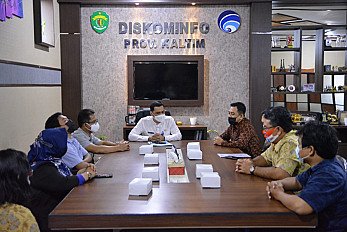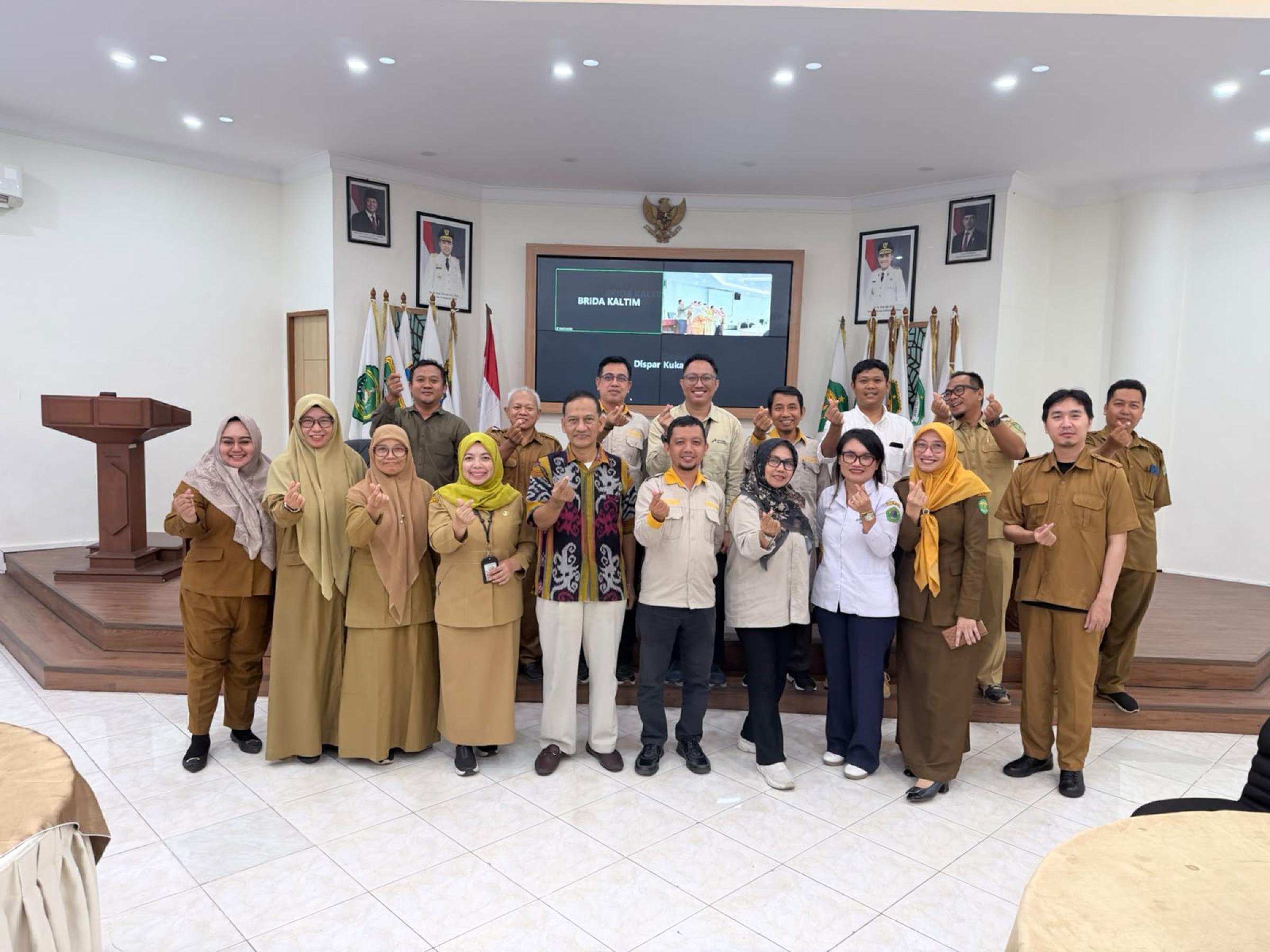
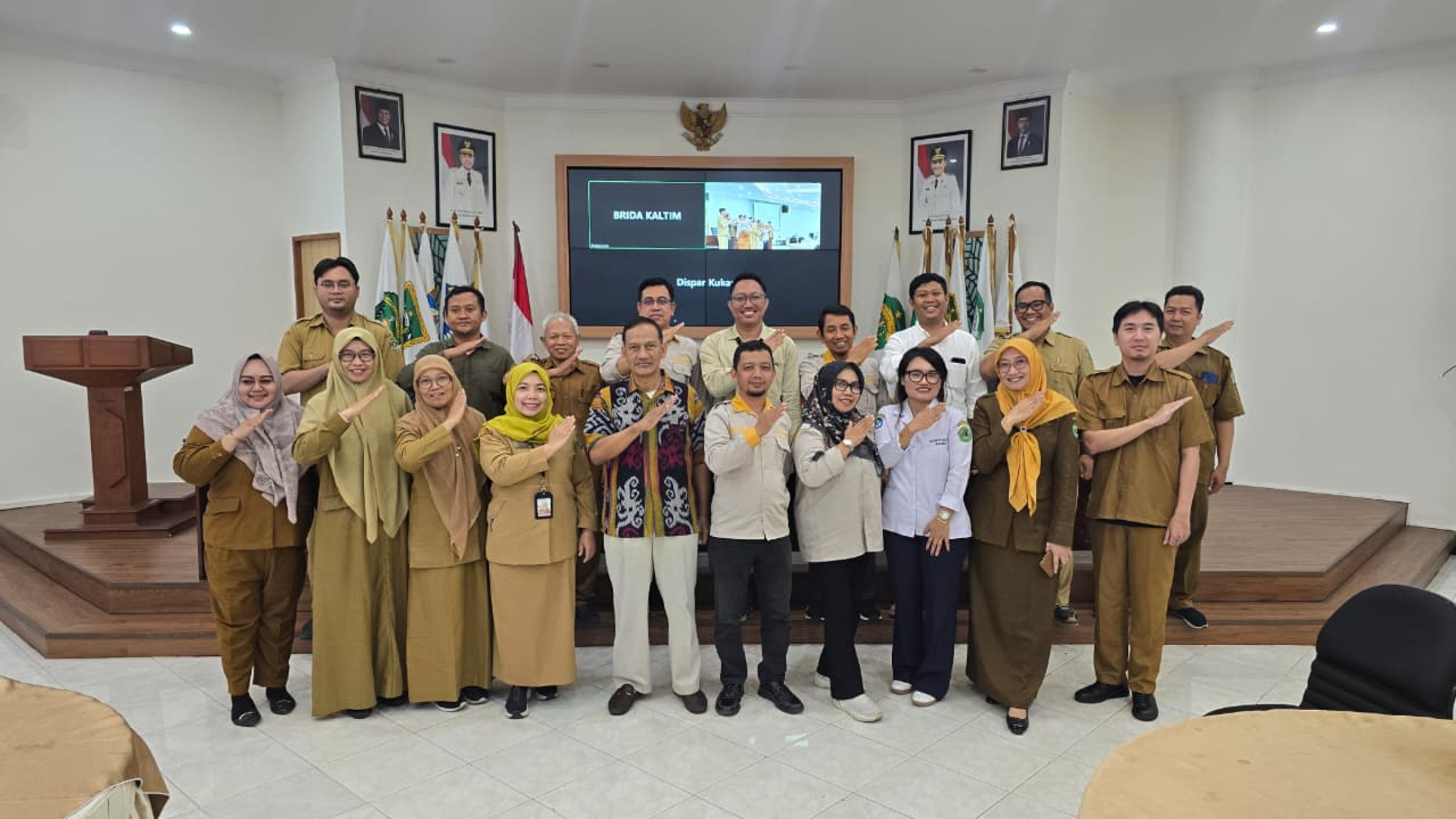
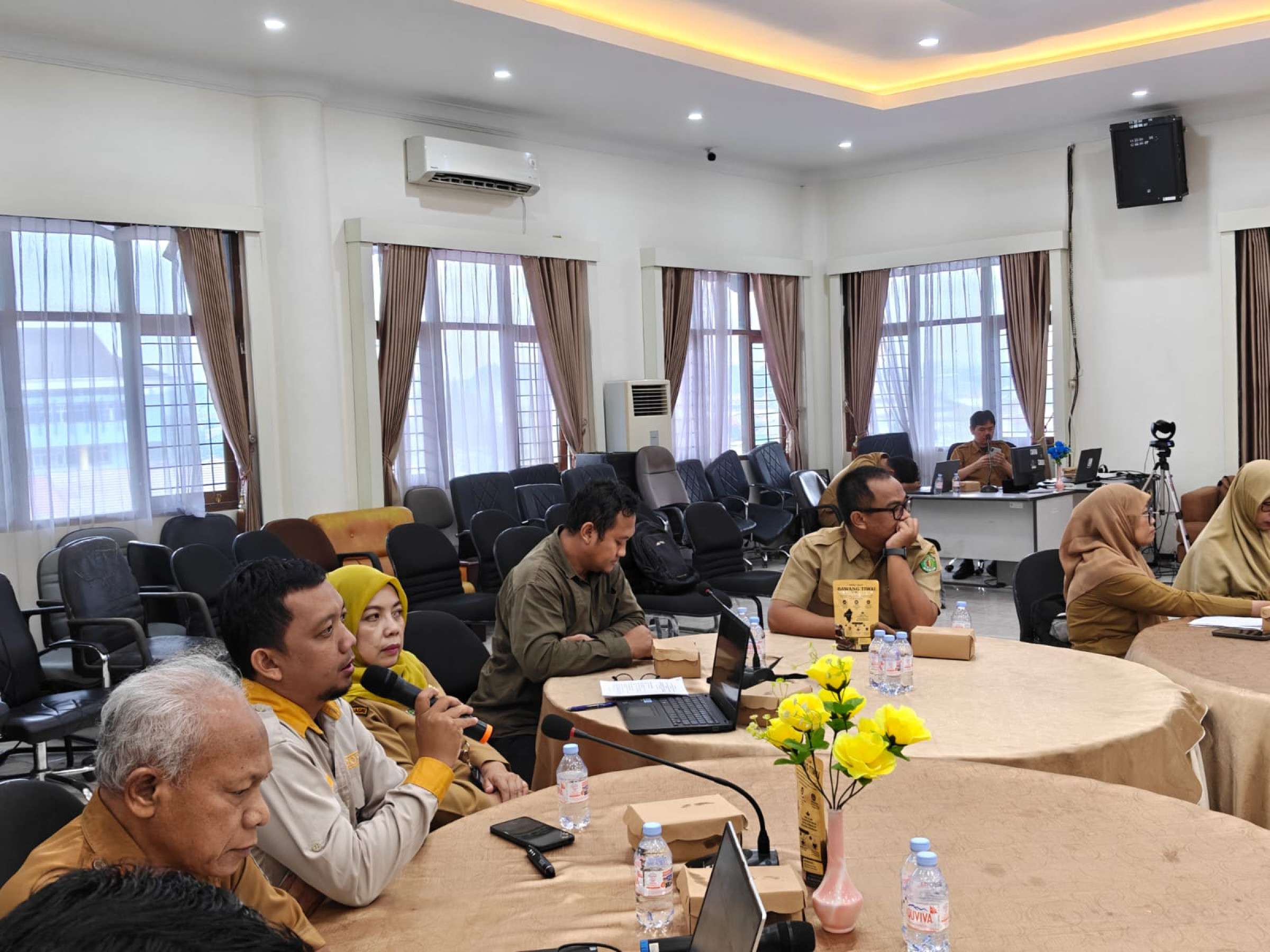
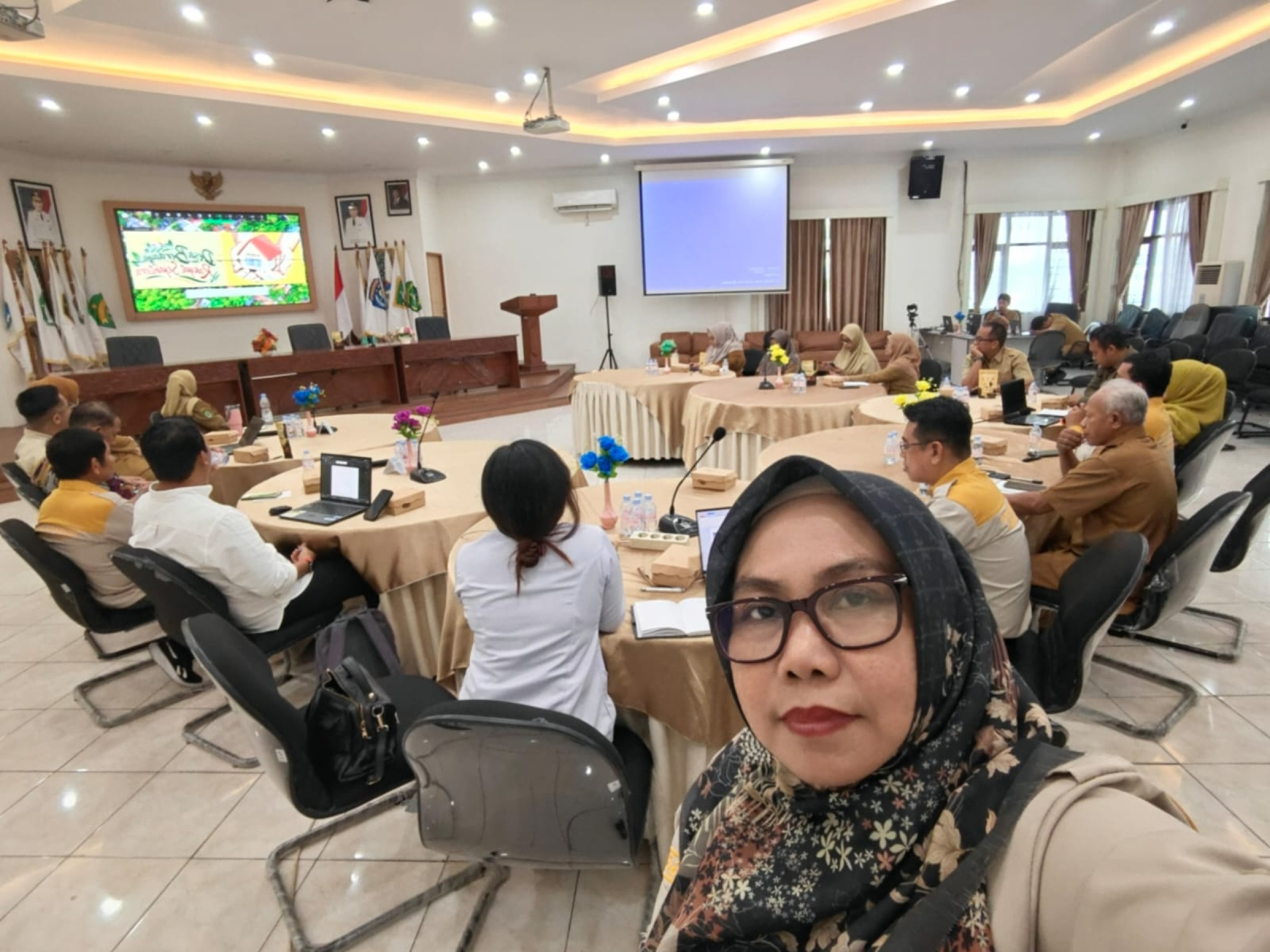
SAMARINDA (19/10/2026) – The Regional Research and Innovation Agency (BRIDA) of East Kalimantan Province held a Strategic Research and Innovation Collaboration (KRIS) event titled “Business Development of *Bawang Tiwai* (Dayak Onion) Herbal Products through the Empowerment of Village-Owned Enterprises (BUMDes) in Sungai Bawang Village, Muara Badak District, East Kalimantan.” The dissemination event took place at the Syahrial Setia Auditorium, BRIDA East Kalimantan Office, on Monday (19/10/2026).
Dr. Ahmad Zamroni, S.Hut., M.P., served as a speaker, accompanied by a research team consisting of Dr. Andi Lisnawati, S.P., M.Si., Dr. Netty Maria Naibaho, M.Sc., M.P., Hamka, S.TP., M.Sc., Mujibu Rahman, S.TP., M.Si., and Adnan Putra Pratama, S.P., M.Sc. The entire team comprises faculty members from the Samarinda State Agricultural Polytechnic.
The event was moderated by Yuli Fitrianto, S.Sos., M.Si., a researcher at BRIDA East Kalimantan, and opened by Dra. Endang S., S.E., M.Si., Head of the Social and Governance Division at BRIDA East Kalimantan Province.
The dissemination was attended by the Head of Sungai Bawang Village, Mr. Martinus; representatives from Pertamina Hulu Sanga-Sanga; the Chairman of the Central Executive Board (DPP) of the Food and Culinary Entrepreneurs Association, Mr. Artha Mulya; representatives from the Kutai Kartanegara Regency Tourism Office; the Head of the Center for Research and Community Service (P3KM) at the Samarinda State Agricultural Polytechnic; as well as researchers from within BRIDA East Kalimantan Province. The presence of these various stakeholders underscores the importance of synergy among higher education institutions, local government, village authorities, the business sector, and the entrepreneurial community in supporting the development of regional research and innovation outcomes. In their presentation, the research team shared the findings of a study on developing a herbal product business based on *tiwai* onion (*Eleutherine bulbosa*), facilitated through the empowerment of the Village-Owned Enterprise (BUMDes) in Sungai Bawang Village, Muara Badak District, Kutai Kartanegara Regency. The study leverages local resource potential as a foundation for creating value-added products while strengthening the role of village economic institutions.
The development of *tiwai* onion herbal products serves as an alternative way to harness local potential through research and innovation. Empowering the BUMDes is a crucial aspect of establishing productive village-level business management, increasing the value of commodities, expanding market access, and creating opportunities for the community to boost their income.
Beyond product processing, business development requires institutional support, partnerships, marketing strategies, and the involvement of various stakeholders. Consequently, collaboration among the village government, higher education institutions, the business sector, and relevant agencies is essential to ensure the sustainability of *tiwai* onion herbal products as a flagship offering rooted in local potential.
The event continued with a discussion session, providing a space for participants to exchange views, offer input, and explore the opportunities and challenges involved in implementing the research findings. This discussion played a vital role in refining development recommendations, ensuring they are contextually relevant and actionable in alignment with the community's needs and the region's potential.
Through the implementation of the Regional Research and Innovation Collaboration (KRIS) initiative, the Regional Research and Innovation Agency (BRIDA) of East Kalimantan Province continues to foster synergy between research, innovation, and community empowerment. The participation of faculty members from the Samarinda State Agricultural Polytechnic further strengthens the contribution of vocational higher education institutions in producing applied research that supports the development of regional potential.
The findings from this study on the *tiwai* onion herbal business are intended to serve as a reference and foundation for developing productive enterprises via BUMDes, strengthening the village economy, and fostering the growth of flagship products based on local potential in East Kalimantan.