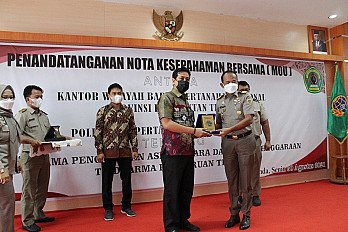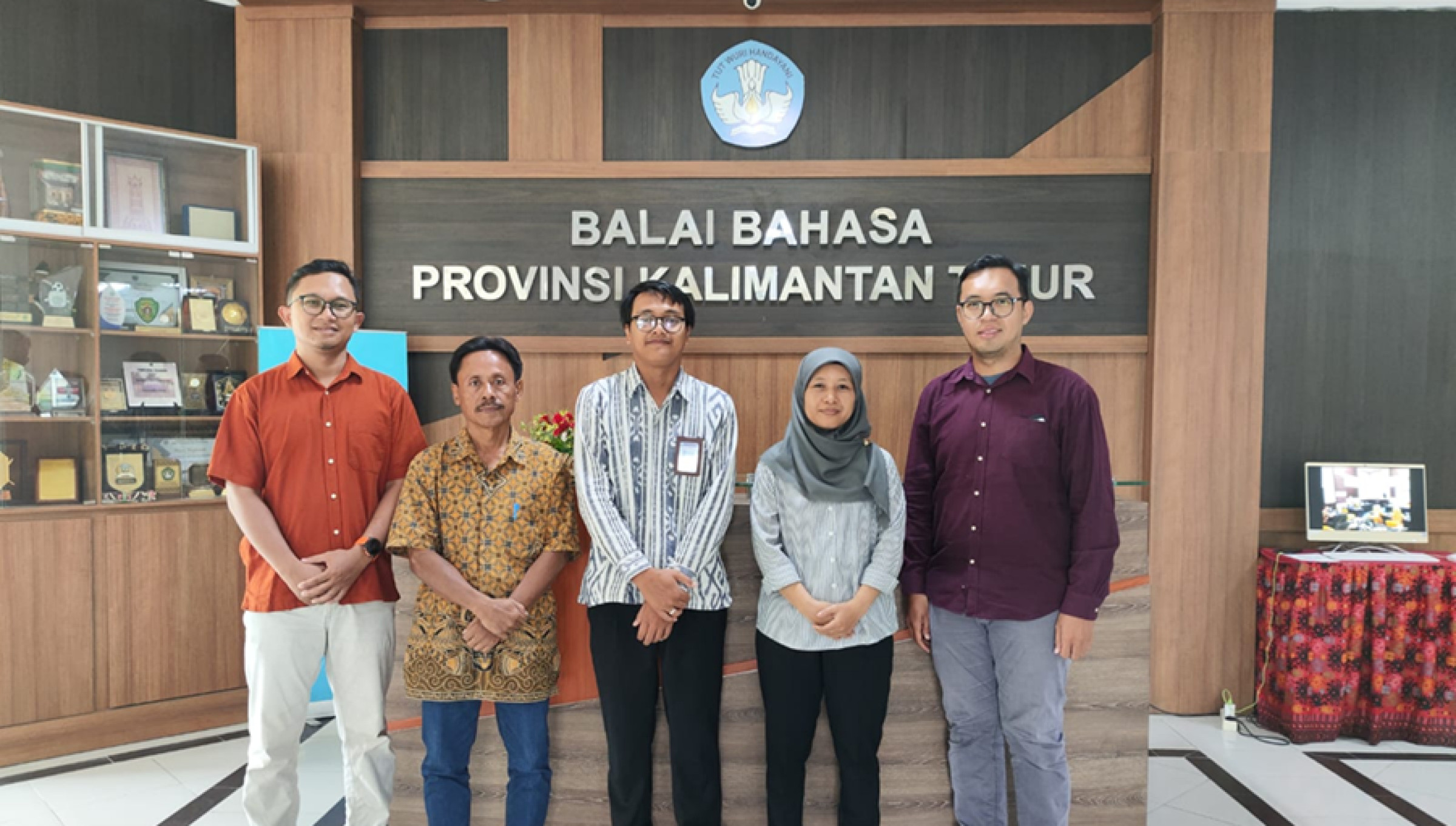
Samarinda — Efforts to preserve the Kutai language as the native language of East Kalimantan are being strengthened through a collaboration between the Samarinda State Agricultural Polytechnic (Politani Samarinda) and the Regional Research and Innovation Agency (BRIDA) of East Kalimantan Province. This research is under the direction of the Head of BRIDA East Kalimantan, with the following research team: Eny Maria, S.Kom., M.Cs; Imron, S.Pd., M.Eng; Bagus Satria, S.Kom., M.Kom; Dr. Suswanto, S.Pd., M.Pd; and Tina Tri Wulansari, S.Kom., M.T.I. This program is part of the East Kalimantan Strategic Research and Innovation Collaboration (KRIS) 2025.
Studies in Kutai Kartanegara indicate that the Kutai language has been made mandatory as a local content subject from elementary to junior high school. However, several schools still face a shortage of native-speaking teachers. In Anggana, schools led by Kutai-speaking principals are able to implement effective teaching, while other schools must rely on modules and training provided by the education office.
In Samarinda City, through Mayoral Regulation No. 15 of 2022, the Kutai language is officially taught in elementary and junior high schools, with complete textbooks and QR codes providing pronunciation guides in the Kutai dialect. This policy demonstrates the multiethnic city's commitment to preserving regional languages.
Meanwhile, in East Kutai, the team found that approximately 10 percent of the population of Singa Geweh Village still belongs to the Kutai ethnic group. The local education office has also developed a Kutai language module for grades 1–6 and made it mandatory local content. However, the availability of competent Kutai language teachers remains a major challenge.
In contrast, the study team in Sepaku District, which is the central development area for the Indonesian Capital City (IKN), found that the majority of the population are transmigrants from East Java, and there are no Kutai speakers in the area. Furthermore, in Penajam Paser Utara and Paser Regencies, the regional language taught in schools is Paser, making Kutai language learning impractical in the IKN buffer zone.
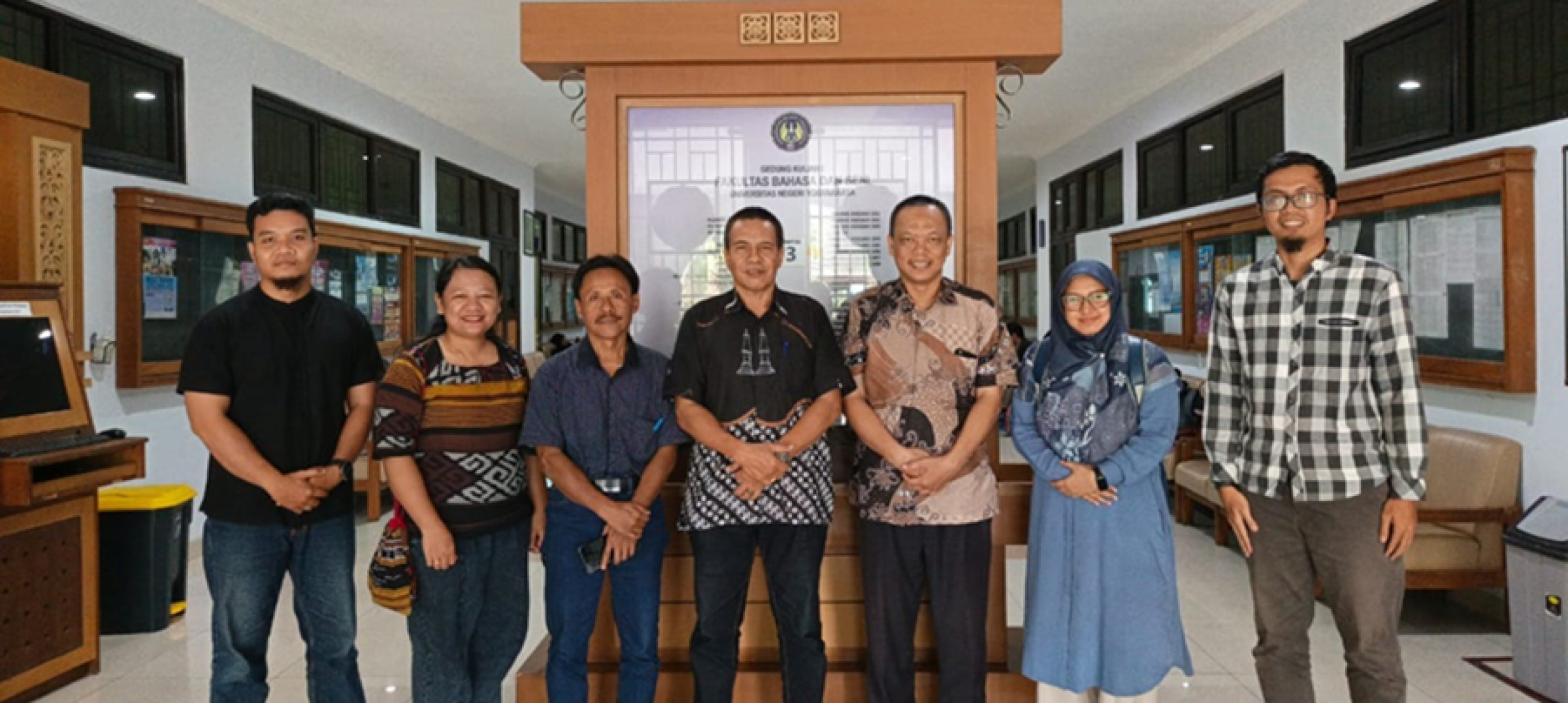
To strengthen its policy recommendations, the team conducted a comparative study at Yogyakarta State University (UNY) with expert team member Dr. H. Nursobah, M.Kom (STMIK Widya Cipta Dharma). The meeting with the Head of the Javanese Language Education Study Program yielded strategic input regarding the development of regional language curricula, strengthening regulations, and providing teaching staff through collaboration between universities and the Language Center.
BRIDA Kaltim emphasized the urgency of digitizing Kutai language learning, including the use of applications, digital dictionaries, and interactive media to support non-native teachers and attract the interest of the younger generation.
Through this study, Dr. M. Ir. H. Fitriansyah, S.T., M.M. (Head of BRIDA Kaltim) emphasized the importance of accelerating the establishment of the Kutai Language Education Study Program in collaboration with universities. This step is expected to produce professional teachers within the next four to five years, while ensuring the survival of the Kutai language and its role as a cultural identity of East Kalimantan in the era of the development of the Indonesian Capital City.
Studies in Kutai Kartanegara indicate that the Kutai language has been made mandatory as a local content subject from elementary to junior high school. However, several schools still face a shortage of native-speaking teachers. In Anggana, schools led by Kutai-speaking principals are able to implement effective teaching, while other schools must rely on modules and training provided by the education office.
In Samarinda City, through Mayoral Regulation No. 15 of 2022, the Kutai language is officially taught in elementary and junior high schools, with complete textbooks and QR codes providing pronunciation guides in the Kutai dialect. This policy demonstrates the multiethnic city's commitment to preserving regional languages.
Meanwhile, in East Kutai, the team found that approximately 10 percent of the population of Singa Geweh Village still belongs to the Kutai ethnic group. The local education office has also developed a Kutai language module for grades 1–6 and made it mandatory local content. However, the availability of competent Kutai language teachers remains a major challenge.
In contrast, the study team in Sepaku District, which is the central development area for the Indonesian Capital City (IKN), found that the majority of the population are transmigrants from East Java, and there are no Kutai speakers in the area. Furthermore, in Penajam Paser Utara and Paser Regencies, the regional language taught in schools is Paser, making Kutai language learning impractical in the IKN buffer zone.
To strengthen its policy recommendations, the team conducted a comparative study at Yogyakarta State University (UNY) with expert team member Dr. H. Nursobah, M.Kom (STMIK Widya Cipta Dharma). The meeting with the Head of the Javanese Language Education Study Program yielded strategic input regarding the development of regional language curricula, strengthening regulations, and providing teaching staff through collaboration between universities and the Language Center.
BRIDA Kaltim emphasized the urgency of digitizing Kutai language learning, including the use of applications, digital dictionaries, and interactive media to support non-native teachers and attract the interest of the younger generation.
Through this study, Dr. M. Ir. H. Fitriansyah, S.T., M.M. (Head of BRIDA Kaltim) emphasized the importance of accelerating the establishment of the Kutai Language Education Study Program in collaboration with universities. This step is expected to produce professional teachers within the next four to five years, while ensuring the survival of the Kutai language and its role as a cultural identity of East Kalimantan in the era of the development of the Indonesian Capital City.
-thumb.jpg)