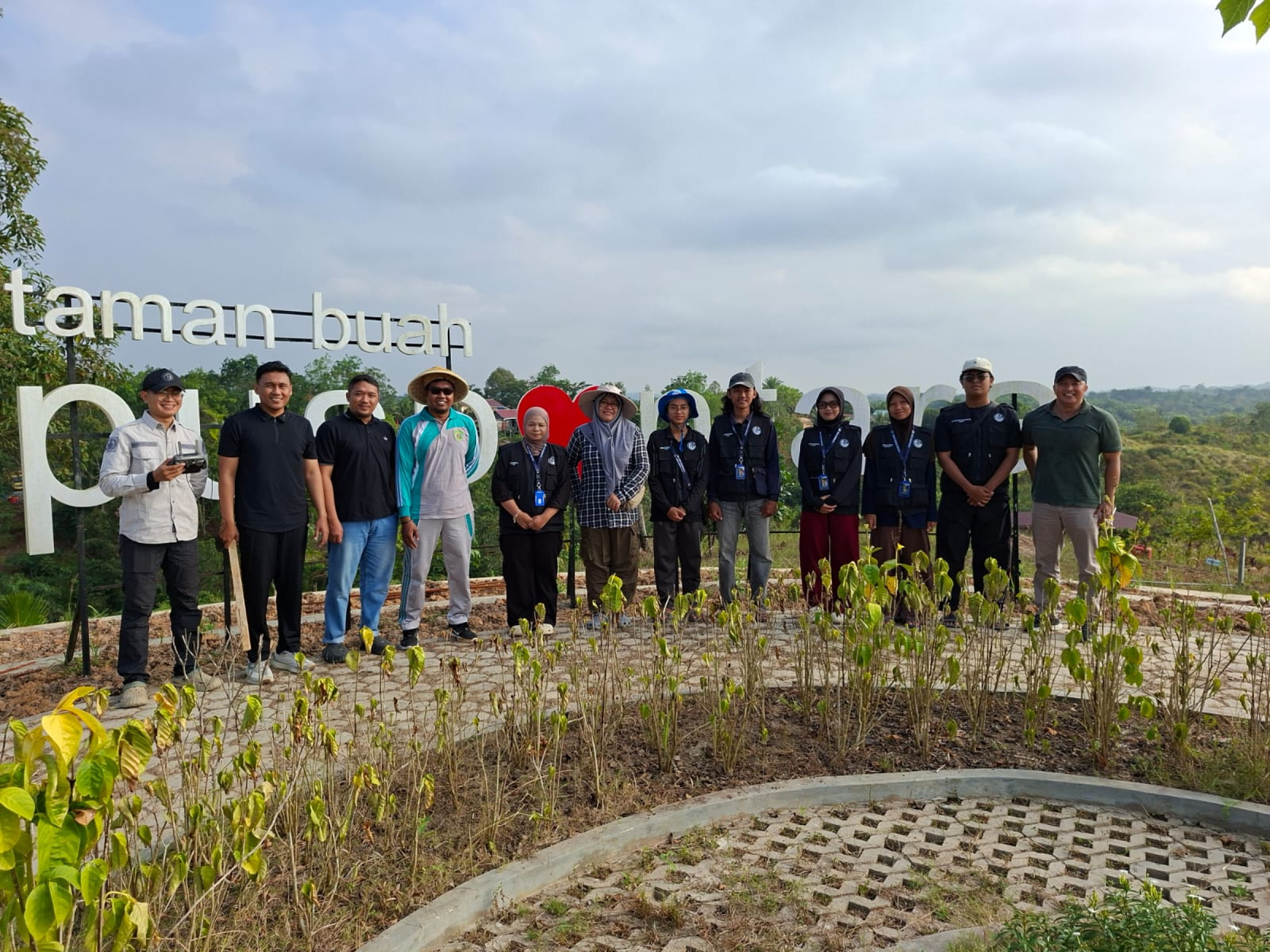
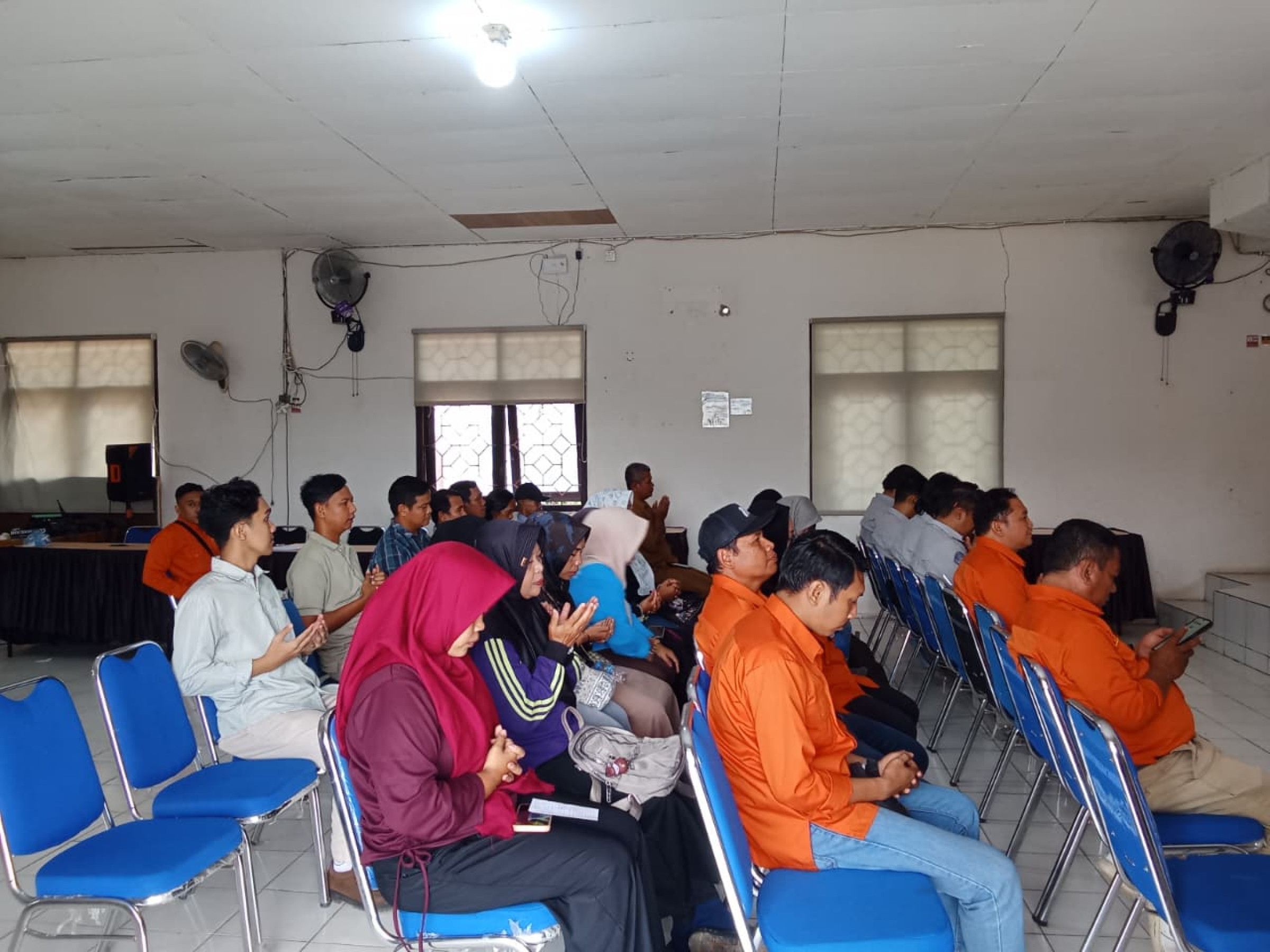
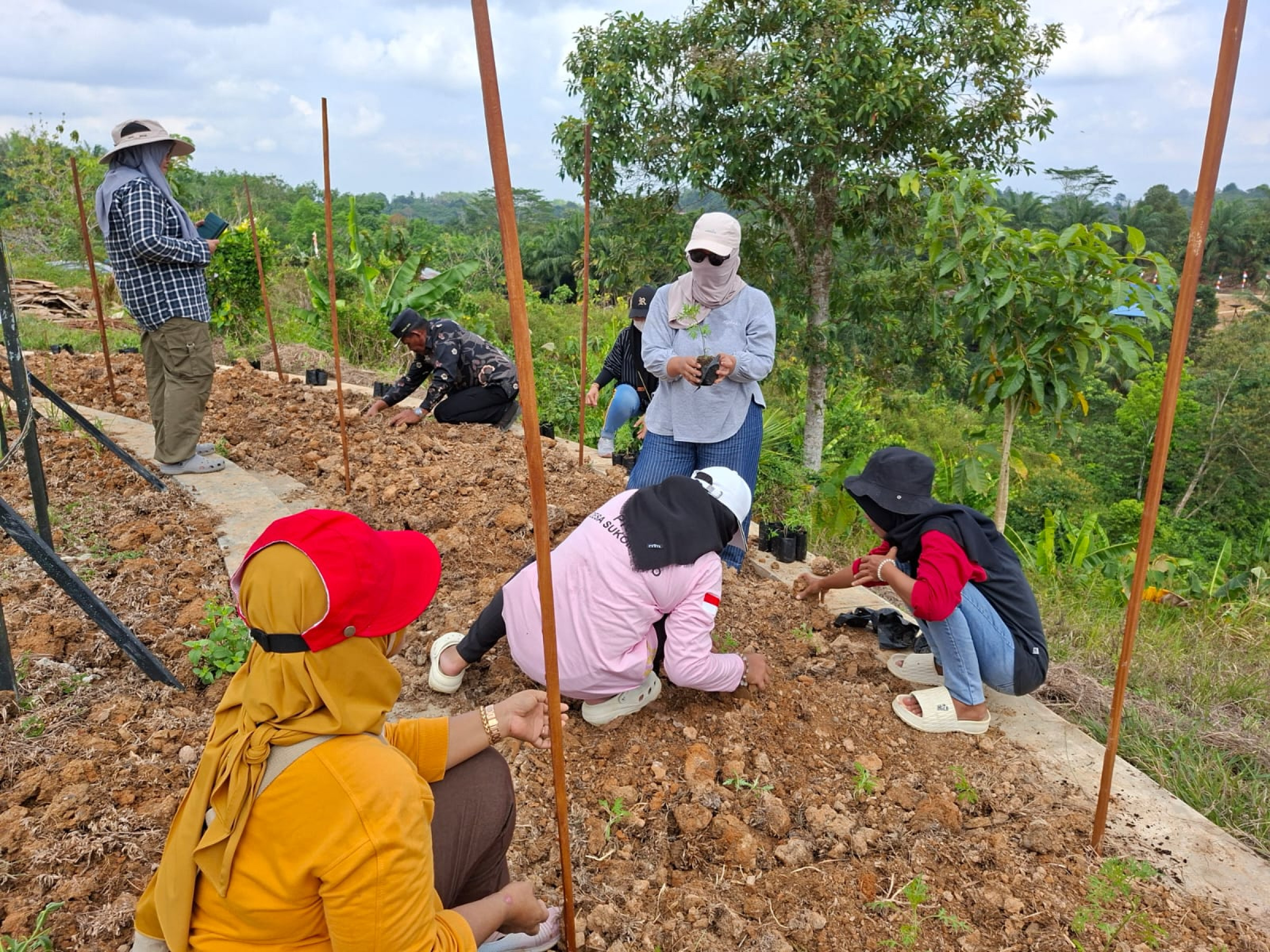
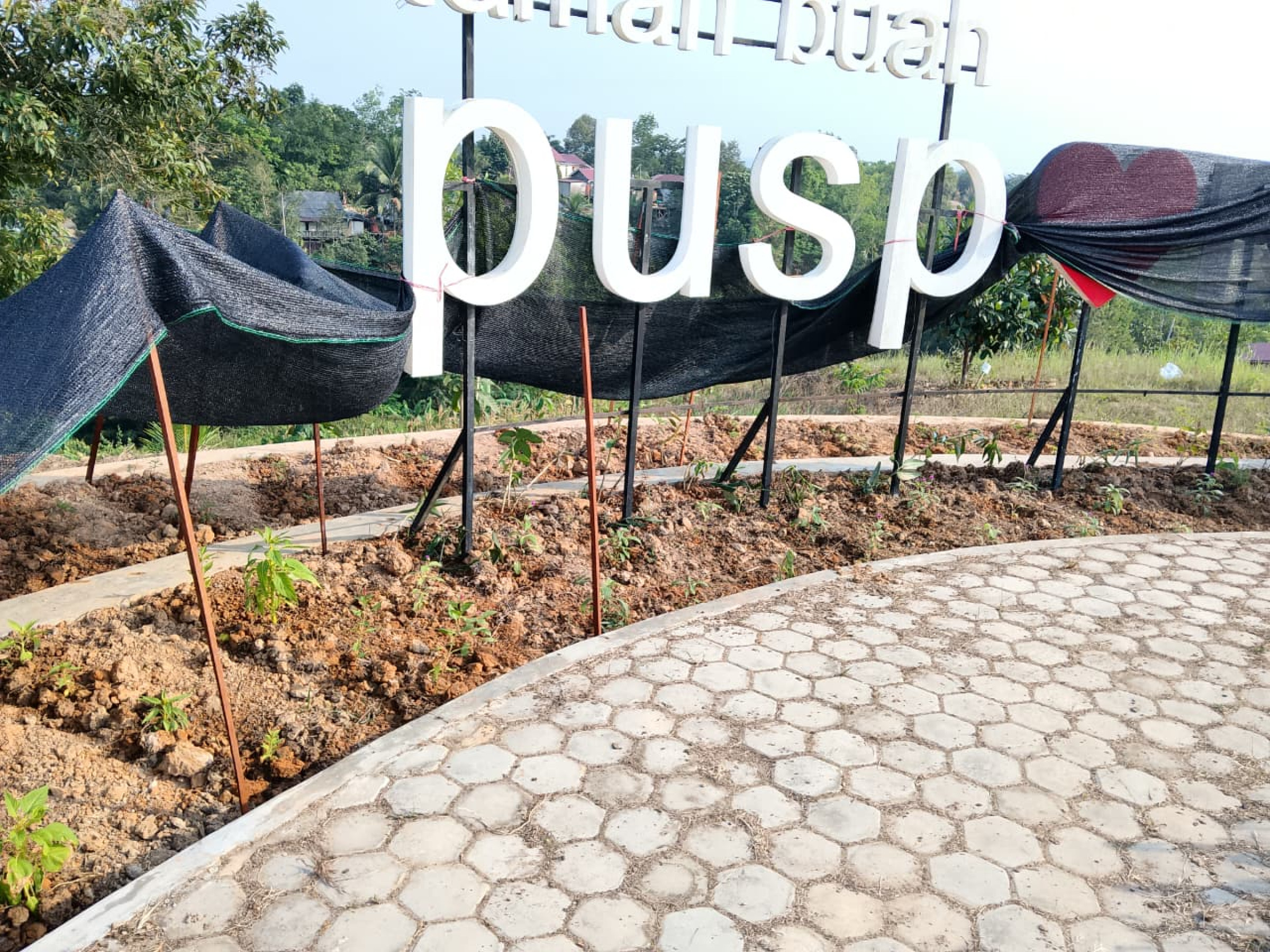
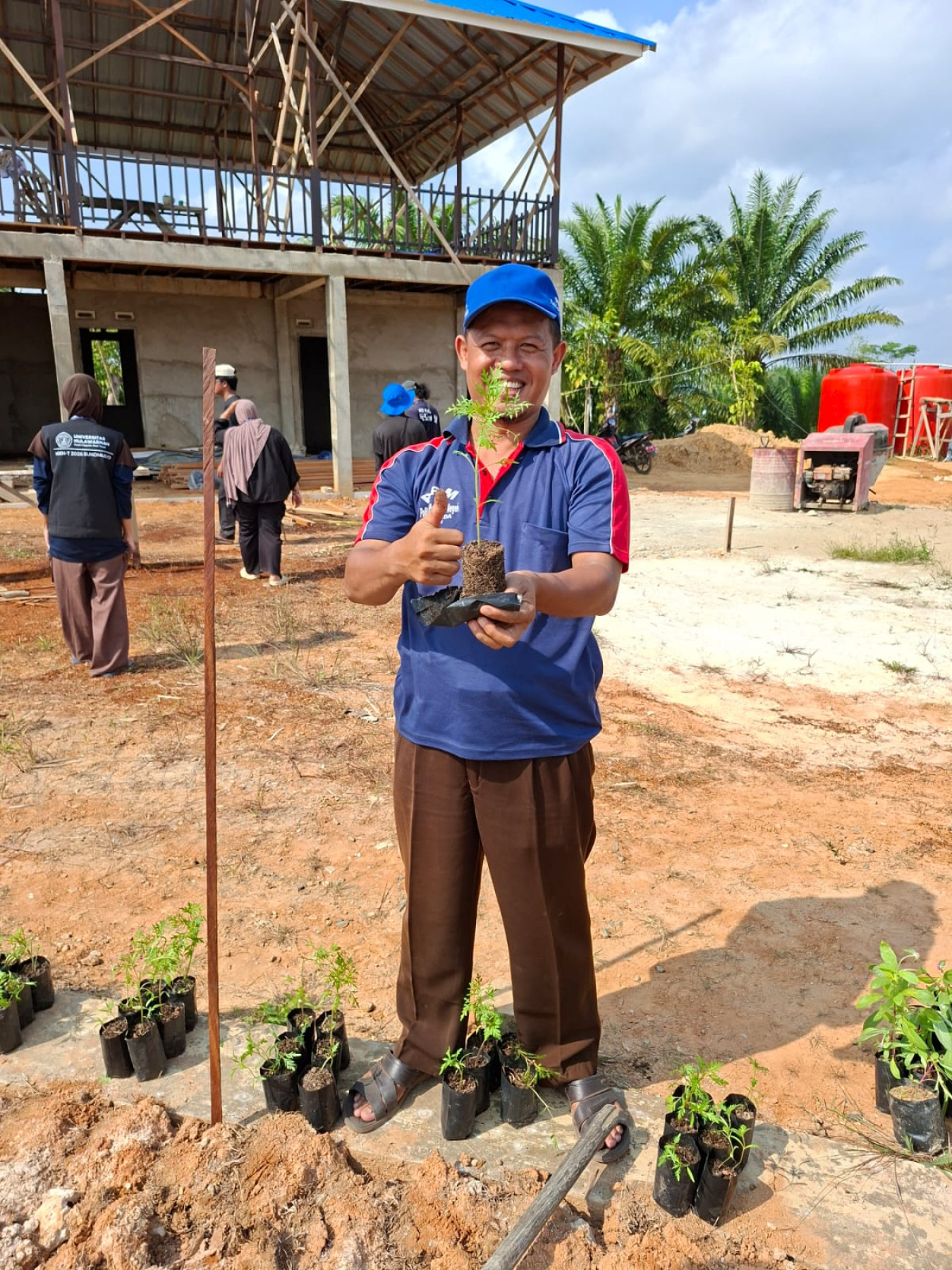
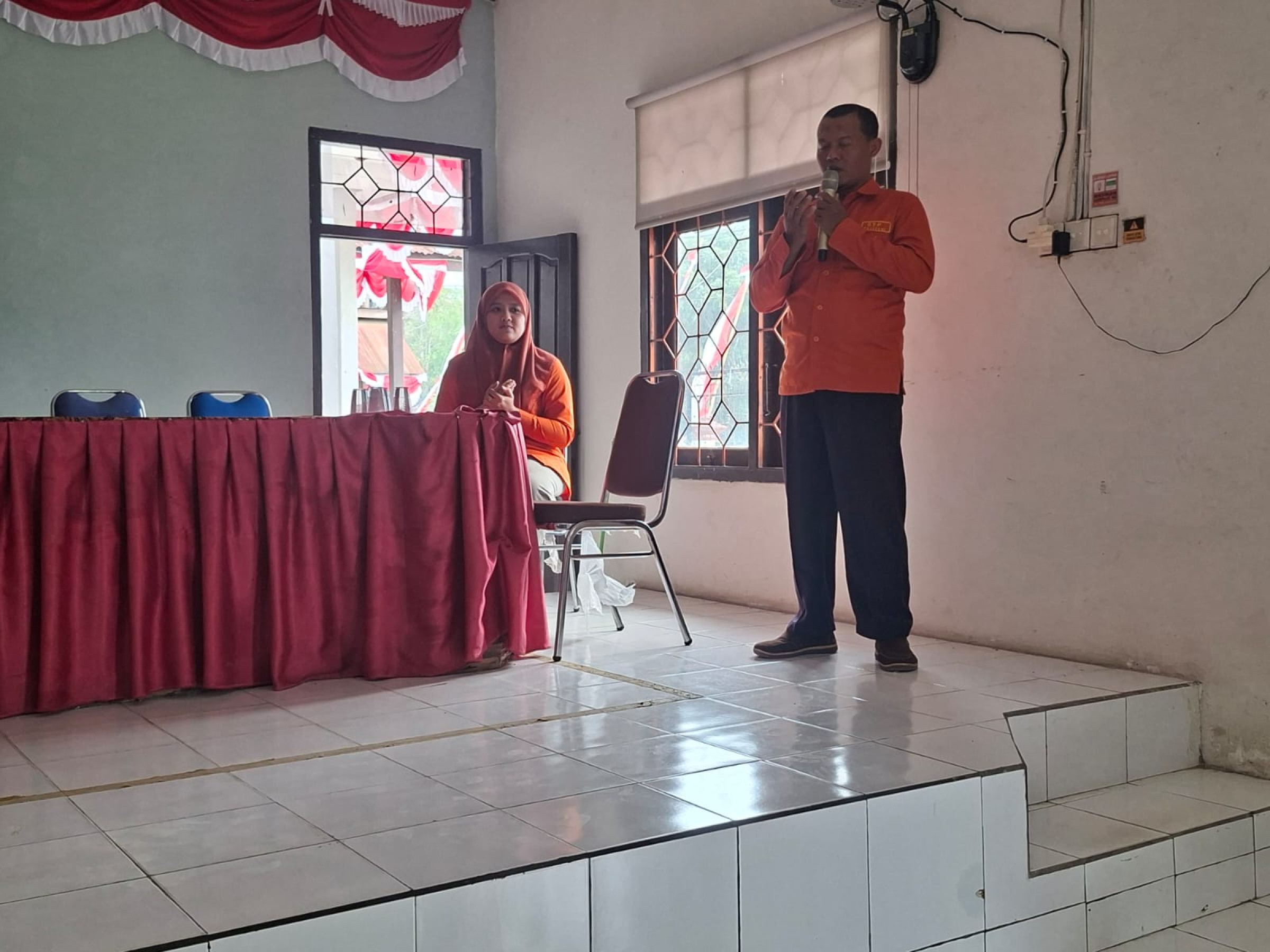
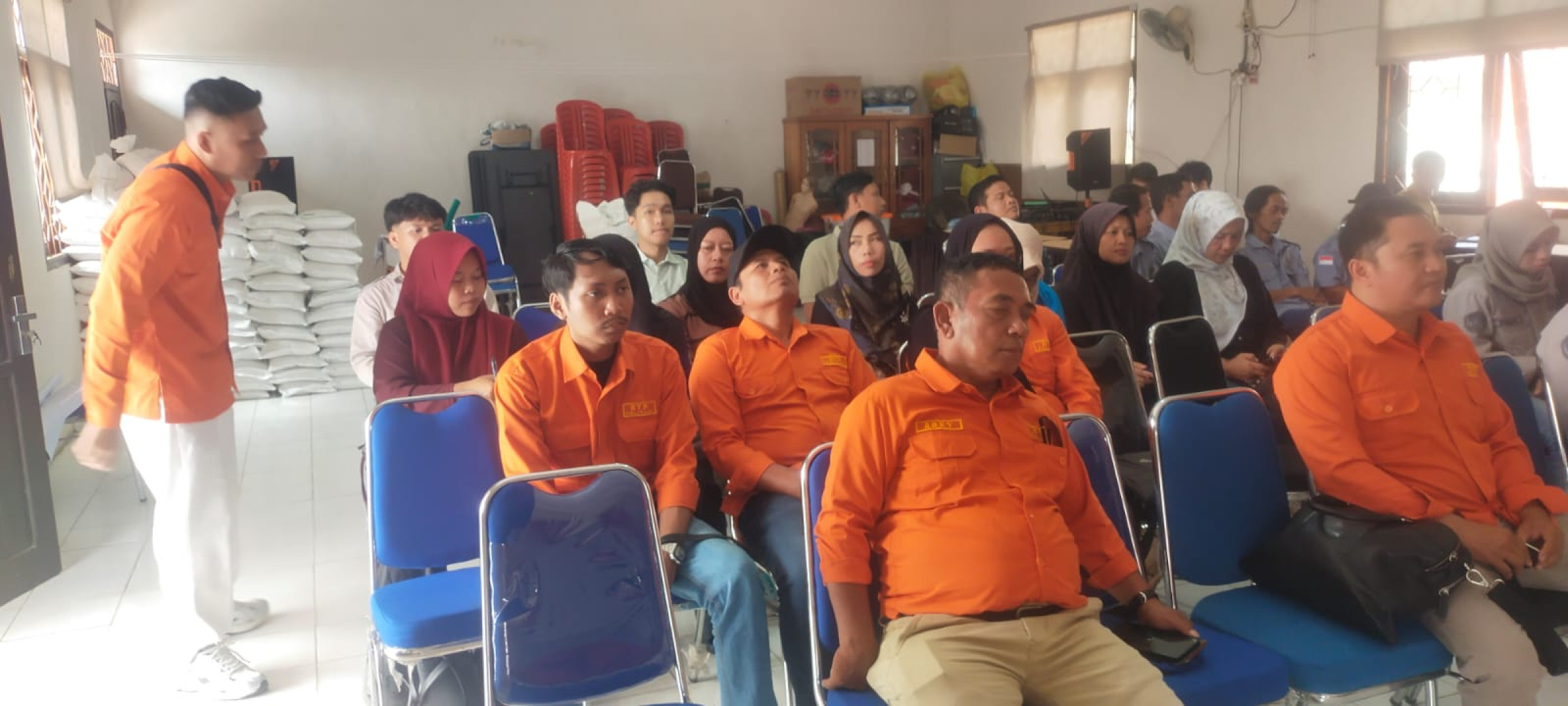
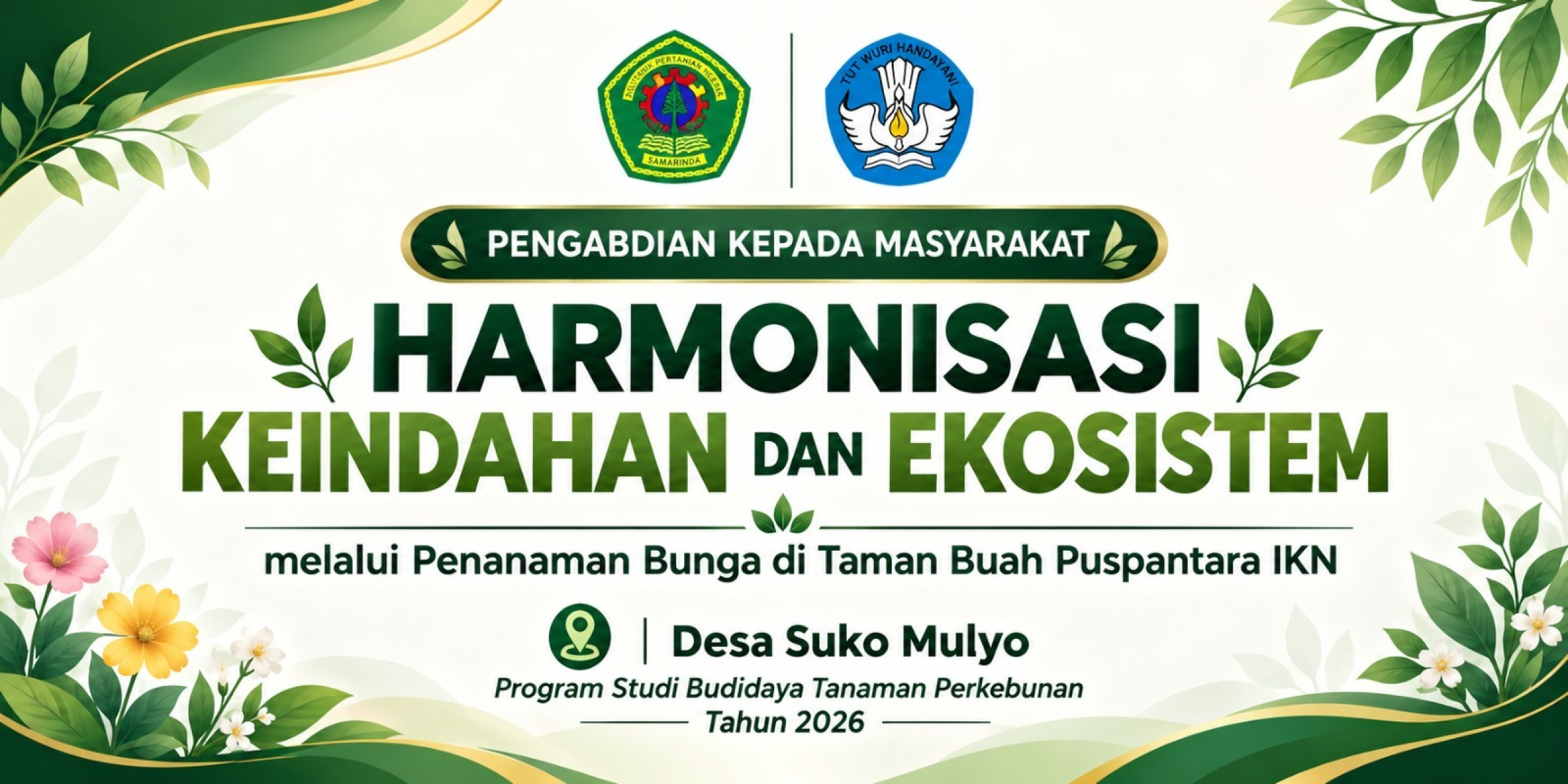
Suko Mulyo – The Plantation Crop Cultivation (BTP) Study Program at the Samarinda State Agricultural Polytechnic conducted a community service activity involving flower planting at the Puspantara Fruit Garden in the IKN area (Suko Mulyo Village) on Monday, September 7, 2026. The event was attended by lecturers, laboratory technicians, and administrative staff from the BTP Study Program, with Study Program Coordinator Roby, SP., MP, serving as the activity coordinator. This flower-planting initiative aimed to harmonize the garden's beauty with ecosystem sustainability in the Nusantara Capital City (IKN) region, while simultaneously reinforcing the role of higher education institutions in supporting environmentally conscious regional development.
During the event, participants worked together to plant various flower species that serve to beautify the Puspantara Fruit Garden landscape while supporting ecological balance—such as attracting natural pollinators and enriching local biodiversity. Roby, SP., MP, stated that this activity represents a tangible contribution by the BTP Study Program to community service, particularly within the IKN region and its surroundings. Through this planting initiative, it is hoped that the Puspantara Fruit Garden will not only become a beautiful green space but also serve as a model of environmental management that balances aesthetics with ecological function.
During the event, participants worked together to plant various flower species that serve to beautify the Puspantara Fruit Garden landscape while supporting ecological balance—such as attracting natural pollinators and enriching local biodiversity. Roby, SP., MP, stated that this activity represents a tangible contribution by the BTP Study Program to community service, particularly within the IKN region and its surroundings. Through this planting initiative, it is hoped that the Puspantara Fruit Garden will not only become a beautiful green space but also serve as a model of environmental management that balances aesthetics with ecological function.
-thumb.jpg)